

The Korea Fair Trade Commission’s (KFTC) case against Google, which could result in fines of up to 849.6 billion KRW (approximately 600 million USD), has emerged as a litmus test for new conflicts surrounding digital regulations between South Korea and the U.S.
This comes after the U.S. Congress raised concerns about the South Korean government’s penalties for Coupang’s data breach and the amended Information and Communications Network Act, dubbed the fake news punishment law. These issues, coupled with the Google case, could be perceived as discriminatory regulations against American companies.
Observers predict that this situation could escalate digital trade conflicts between the two countries. Meanwhile, the South Korean government maintains that its domestic law enforcement does not target specific countries or companies with discriminatory regulations.
American Researcher: Digital Regulations Could Undermine Trust in Korea-U.S. Tech Cooperation
On Wednesday, industry sources reported that Nigel Cory, a visiting researcher at the National Bureau of Asian Research (NBR), argued in a recent article for The National Interest that South Korea’s digital regulations could harm economic and technological cooperation between the U.S. and South Korea.
Cory stated that the partnership and interdependence between South Korea and the U.S. have deepened more than ever. He added that both countries’ companies invest capital and technology in each other’s markets and build artificial intelligence (AI) and advanced industry supply chains together. However, trade friction surrounding digital regulations threatens the trust in the bilateral relationship.
He cited the AI Summit held on July 24 in San Francisco, led by President Lee Jae Myung, as a prime example of cooperation. At that summit, Samsung Electronics and SK Group announced a collaboration plan worth 950 billion USD in AI semiconductors and infrastructure with American companies like NVIDIA and Broadcom.
Conversely, he pointed out that a completely opposite trend is emerging in the area of digital regulations.
Cory referenced the report titled, Closed for Competition: South Korea’s Discriminatory Attacks on American-owned Businesses, released by the U.S. House Judiciary Committee’s Antitrust Subcommittee last month, claiming that the KFTC’s law enforcement has focused on American companies.
He explained that seven out of the top ten fines for abuse of market dominance imposed by the KFTC were against American companies, accounting for 95.5% of the total fines. He also mentioned the ongoing case against Google’s app market for abuse of market dominance and the sanctions process against the American semiconductor company Analog Devices (ADI).
Cory asserted that it is insufficient to explain why certain cases become the subject of investigation and how law enforcement is carried out simply by stating that fines concentrate on companies with high market shares. He noted that multiple regulatory agencies in South Korea frequently target American companies for investigations simultaneously.
He highlighted not only the KFTC but also other government agencies.
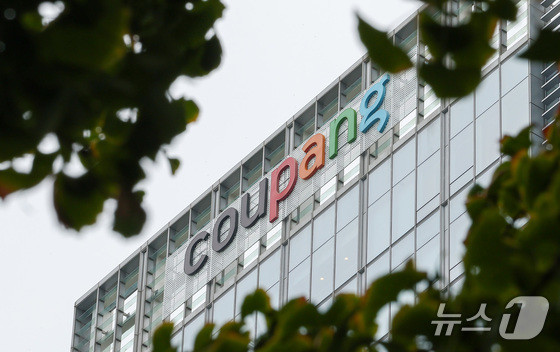
He mentioned that the Personal Information Protection Commission imposed a record fine of 623.6 billion KRW (approximately 440 million USD) on Coupang in June for a data breach, and in July, the National Tax Service conducted a special tax audit, indicating that regulations targeting American companies are accumulating.
The Trump Administration Imposed a 100% Retaliatory Tariff on the EU for Penalizing Google
On August 7, Republican members of the U.S. House Judiciary Committee sent an official letter to Kim Jong-cheol, the chairman of the Broadcasting, Media, and Communications Committee, requesting explanations regarding the background of the enforcement of the so-called fake news punishment law, including the scope of false and manipulated information and enforcement standards.
They argued that the scope of false and manipulated information regulated by the amended law is vague and could be used to regulate expressions that the South Korean government politically disapproves of. They also expressed concerns that this could affect the freedom of expression of American companies and users, as major targets include Google, Meta, and X.
Regarding the regulations surrounding Coupang, 54 members of the Republican Study Committee in the U.S. House previously expressed their concerns in a letter to Korean Ambassador to the U.S. Cho Yoon-je, addressing the investigation into Coupang and online platform regulations in April.
After Coupang was fined in July, the House Judiciary Committee released a report claiming that the South Korean government’s regulations on American companies, including Coupang, could violate the Korea-U.S. trade agreement.
This trend indicates a movement toward linking digital regulations more directly to trade issues.
Cory emphasized in his report that after the European Union (EU) fined Google 890 million EUR (approximately 1.02 billion USD) for violating the Digital Markets Act (DMA), President Donald Trump described it as an act of predation on American companies, warning of a Section 301 trade investigation and additional tariffs. At that time, predictions suggested that retaliatory tariffs could reach up to 100%.
Cory assessed that this represents a shift in how the U.S. approaches big tech regulation abroad, treating it as a trade issue rather than merely enforcing competition laws.
Cory claimed that if the South Korean government continues its recent trend of targeting American companies with regulations, it may begin to view these issues through the same lens.
More directly, he suggested that the KFTC’s current sanctions against Google could potentially lead to retaliatory tariffs from the Trump administration.
Cory stated that South Korea must choose whether to resolve these regulatory issues during the ongoing Korea-U.S. trade negotiations or to escalate conflicts across the broader bilateral relationship. He argued that regulatory improvements could further strengthen the technology alliance, while failure to do so could impose burdens on both economies beyond the technology sector.

The KFTC May Impose Fines of Up To 849.6 billion KRW on Google, Marking a Pivotal Moment in Digital Conflicts
Industry experts believe that the KFTC’s case against Google could serve as a benchmark for future discussions on digital regulations between South Korea and the U.S.
The KFTC is currently reviewing the case, believing that Google has restricted competition by encouraging game developers to launch games under more favorable conditions on Google Play compared to competing app markets through its so-called Game Velocity Program (GVP) contracts.
The KFTC estimates the related revenue at approximately 14.16 trillion KRW (about 10 billion USD), and under the Fair Trade Act, the maximum fine can reach 6% of the related revenue. However, this is a legal maximum; the actual imposition of penalties and the amount of fines will be determined after deliberation by the full committee.
The South Korean government maintains that its domestic digital policies do not target specific countries or companies with discriminatory regulations. Regarding the Information and Communications Network Act, relevant ministries are explaining the intent of the legislation and its enforcement direction to the U.S. Furthermore, the KFTC case is viewed as an individual case under competition law.
An industry insider commented that it is concerning that recent movements in the U.S. are addressing South Korea’s digital regulations as a whole, beyond individual issues like the Coupang investigation or the Information and Communications Network Act.
However, this insider also stated that it is essential to differentiate between the KFTC’s law enforcement and the issue of discrimination against American companies, adding that since the final judgment on the Google case has not yet been made, it needs to observe how the KFTC justifies its decisions and how the U.S. government and Congress respond.