As China prepares for the upcoming summit with the U.S. on September 24, it has intensified diplomatic pressure on South Korea by enforcing its official stance on Taiwan, known as the One China Principle, even at local and private events. Analysts suggest this move is aimed at demonstrating China’s influence over Taiwan ahead of its talks with the U.S.
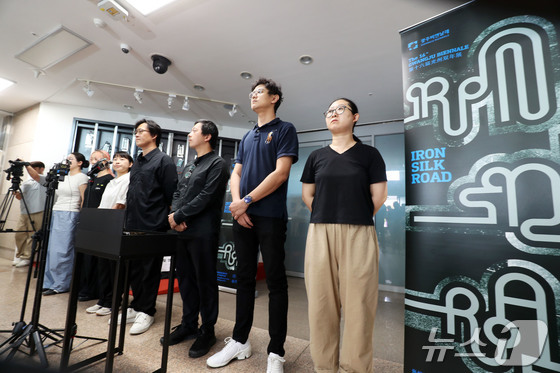
On Thursday, the Chinese Embassy in South Korea criticized the Gwangju Biennale for allowing the use of the term Taiwan Pavilion, arguing that it severely violates the One China Principle and undermines the political foundation of Korea-China relations.
The embassy’s direct involvement in Taiwan-related issues signals China’s intention to treat this matter as a current concern in Korea-China relations.
Despite Gwangju Integrated City’s apology for procedural shortcomings while maintaining its respect for the One China principle, China maintained its hardline stance, including withdrawing from the exhibition. China also canceled a planned visit by a delegation from Guangzhou City’s People’s Congress Standing Committee to Gwangju Integrated City, scheduled for September 6-7. Additionally, a delegation from Zhoushan City in Zhejiang Province canceled its visit to the Yeosu World Island Expo, citing the same issue.
The Gwangju Biennale had initially categorized exhibition participation as either national or institutional. The National Taiwan Museum of Fine Arts’ exhibition hall was originally designated as the Taiwan Pavilion, falling under the national category. However, the Biennale later changed the name to NTMoFA Pavilion, using the abbreviation for the National Taiwan Museum of Fine Arts, thus reclassifying it as an institutional exhibition.
This name change triggered backlash from Taiwanese authorities and the art community. In response, on August 25, the Biennale decided to restore the exhibition hall’s name to Taiwan Pavilion, operating it in the national category.
This decision prompted objections from China, which argued that the Biennale’s actions indicate a refusal to acknowledge the One China principle and recognize Taiwan’s national status.
However, China’s strong reaction is seen as unexpected, given that it did not respond so sensitively during past Gwangju Biennales.
In this context, analysts suggest that China may be sending a message to the U.S. ahead of the summit between President Xi Jinping and President Donald Trump, indicating that it will not back down on the Taiwan issue. While not directly targeting the U.S., this stance emphasizes China’s unwillingness to make concessions on this matter.
Professor Kang Jun-young, an expert in Chinese politics and cross-strait relations at Hankuk University of Foreign Studies, described China’s response as unusual.
Critics argue that pressuring local and private events is inappropriate, especially considering the agreement between South Korea and China to expand civilian and cultural exchanges following their summit in January. Some even accuse China of demanding that the government censor private and local events to align with Chinese preferences.
The South Korean government has stated that this issue does not warrant direct intervention from diplomatic authorities. Foreign Ministry spokesperson Park Du-sun reiterated on Thursday that the government’s fundamental stance on Taiwan remains unchanged, adding that this matter is a decision made independently by the private sector in the cultural and artistic realm.
Another Foreign Ministry official told News1 that while the government will not intervene in decisions made by local governments or private organizations, it acknowledges that China is taking this matter seriously and is maintaining communication regarding the issue.
In a related development about two weeks ago, China denied entry to South Korean lawmakers Kwak Sang-eun of the Democratic Party and Kim Ki-hyun of the People Power Party, both of whom had visited Taiwan, reflecting its ongoing sensitivity to the Taiwan issue.
China Denies Entry to Lawmakers Who Visited Taiwan; Tensions Rise in Korea-China Relations
The Foreign Ministry criticized these unilateral actions that restrict lawmakers’ legitimate activities and raised the issue through diplomatic channels. China’s response to this has yet to be confirmed.
Shortly after the inauguration of the Lee Jae Myung administration, China made somewhat unreasonable demands, such as requesting that South Korea manage anti-China protests at the official level, asserting that South Korea must fundamentally accept China’s position.
Professor Kang views this as a message ahead of the U.S.-China summit, suggesting that the pressure on South Korea is much stronger than that directed at the U.S. He believes that China aims to demonstrate its resolve regarding the Taiwan issue to the U.S. and Japan while directly pressuring South Korea.
However, some analysts believe that China is not yet pushing Taiwan-related matters to the extent of fundamentally altering Korea-China relations. The Chinese Embassy in South Korea emphasized in a recent statement that Korea-China relations have recently returned to a proper trajectory of improvement and development, urging both nations to cherish this progress.
Observers predict that for the time being, China will continue to highlight the Taiwan issue during significant occasions, opting for limited measures to signal warnings rather than engaging in an all-out confrontation that could disrupt overall Korea-China relations.