

Samsung Electronics is showing promising signs of a performance turnaround in its System LSI division, part of the semiconductor (DS, Device Solutions) sector. The company has secured new image sensor clients and begun supplying application processors (APs) for smartphones.
Industry sources reported on Tuesday that Xiaomi’s latest smartphone, the Civi 5, released in May, features Samsung’s cutting-edge image sensor, the ISOCELL JNP.
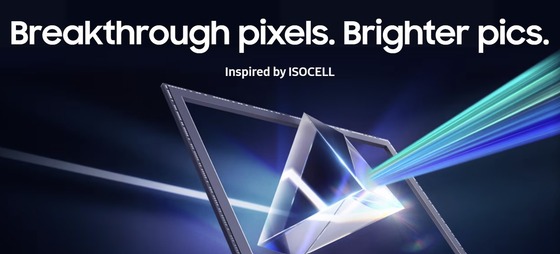
While Samsung has previously supplied image sensors to Chinese smartphone manufacturers like Xiaomi, Oppo, and Vivo, the ISOCELL JNP stands out as the first in the industry to incorporate nano-prism technology.
As smartphone cameras continue to shrink, so do the pixels in image sensors. However, smaller pixels struggle to capture light effectively, resulting in blurry or noisy photos in low-light conditions.
To address this challenge, Samsung implemented nano-prism technology in its image sensors. By placing nanometer-sized prism structures above the pixels, the sensors can effectively refract surrounding light, increasing light capture. This innovation allows for brighter and clearer images. Samsung reports a 25% improvement in sensitivity for the ISOCELL JNP compared to previous sensors.
The Xiaomi Civi series, which incorporates the ISOCELL JNP, is positioned as a mid-premium or lightweight flagship product targeting the Chinese market. While it won’t see the global distribution like Xiaomi’s flagship 15 series, it has reportedly achieved significant sales within China.
According to Counterpoint Research, Xiaomi tied for first place in the Chinese smartphone market in Q1, sharing a 19% market share with Huawei. Strong sales of the Civi 5 could boost System LSI’s performance in the latter half of the year.
Another key factor in this potential turnaround is the next-generation smartphone AP, the Exynos 2600. Samsung plans to mass-produce this chip using its advanced GAA (Gate-All-Around) 2-nanometer process by year-end. The inclusion of the Exynos 2600 in the upcoming Galaxy S26 series, slated for early next year, could significantly impact the System LSI division’s performance.
The previous Exynos 2500 was omitted from the Galaxy S25 series launched in January due to yield and quality issues, resulting in estimated losses exceeding 2 trillion KRW (about 1.45 billion USD) in both Q1 and Q2 this year. The Exynos 2500 did, however, debut in the recently launched Galaxy Z Flip 7. Yet, the Galaxy Z Flip series’ annual sales volume is only about 15-17% of the Galaxy S series, which exceeds 30 million units annually.
If the Exynos 2600 is incorporated into the Galaxy S26 series, it could substantially improve performance through increased operational efficiency at Samsung Foundry, higher System LSI sales, and reduced AP procurement costs from Qualcomm Incorporated.
Park Yong In, head of the System LSI division, told reporters at a recent event that the division is making steady progress with the Exynos 2600 following the Exynos 2500, and that optimistic results are anticipated.
However, he remained noncommittal about the Exynos 2600’s inclusion in the Galaxy S26 series, stating that such decisions ultimately rest with their clients.