

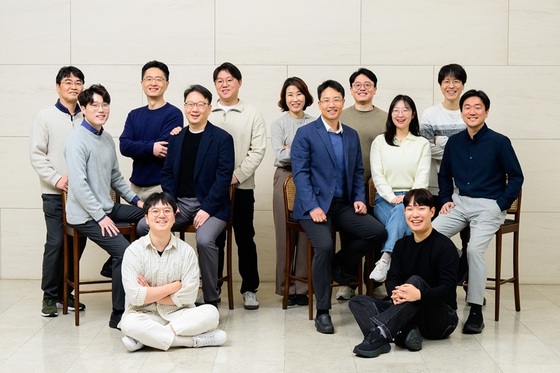
Samsung Electronics’ Advanced Institute of Technology (SAIT) researchers have made a groundbreaking discovery that could revolutionize power consumption in the AI era. They’ve identified a mechanism to slash power usage in existing NAND flash memory by up to 96%.
Samsung Electronics announced on Thursday through its semiconductor newsroom that SAIT’s research on “Ferroelectric Transistors for Ultra-Low Power NAND Flash Memory” has been published in the prestigious scientific journal Nature.
This breakthrough is the result of pure in-house R&D efforts, involving 34 co-authors from SAIT and the Semiconductor Research Institute. The study demonstrates the potential to dramatically reduce power consumption in cell string operations by up to 96% through a novel NAND flash structure that combines ferroelectrics with oxide semiconductors.
Conventional NAND flash memory stores data by injecting electrons into cells, requiring more cells (or layers) to increase storage capacity. However, this design leads to higher voltage requirements and increased power consumption for read and write operations as the number of layers grows, due to the sequential signal transmission through serially connected cells.
Previous attempts to address this issue have explored next-gen NAND technologies based on ferroelectrics, which can store information by changing polarization without electron injection. Yet, the challenge of balancing increased capacity with power efficiency remained unsolved.
SAIT researchers found the key to this puzzle in the unique properties of oxide semiconductors. While these materials typically struggle with precise threshold-voltage control, they excel at minimizing leakage current. The team made a world-first discovery: when combined with ferroelectric polarization control, the oxide semiconductors’ threshold-voltage quirk becomes a crucial mechanism for significantly lowering the operating voltage in cell-string operations.
This innovation enables a staggering 96% reduction in power consumption while achieving industry-leading storage density of 5 bits per cell. It represents a major leap forward in overcoming the structural limitations of existing NAND flash through advanced materials science and deeper structural insights.
The potential impact of this technology, once commercialized, is far-reaching. It could enhance power efficiency across the board, from massive AI data centers to mobile and edge AI systems. For data centers, this translates to lower operational costs, while mobile devices could see extended battery life. Samsung Electronics has effectively charted a course for developing revolutionary low-power, high-capacity SSDs, solidifying its future market position.
SAIT, Samsung Electronics’ forward-thinking research arm, focuses on technologies expected to emerge in the next five years or beyond. The institute explores early-stage seed technologies across various fields, including semiconductors, displays, and batteries. SAIT’s cutting-edge research regularly appears in top-tier scientific publications, including Nature and its sister journals.
Some of SAIT’s most notable research breakthroughs include: demonstrating the commercial viability of self-emissive QLEDs (Nature, 2019), developing foundational technology for all-solid-state batteries that enhances lifespan and safety while halving size (Nature Energy, 2020), outlining a vision for brain-like neuromorphic semiconductors (Nature Electronics, 2021), and achieving the world’s first implementation of in-memory computing based on MRAM (Nature, 2022).