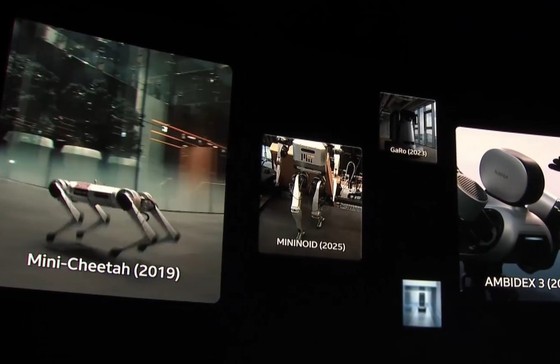
Naver, along with its subsidiaries Naver Cloud and Naver Labs, has encountered setbacks in its ambitious humanoid robot project. This delay has sparked growing concerns about the tech giant’s robotics capabilities, especially considering Naver was the pioneer in humanoid development within South Korea.
Industry sources revealed on Monday that the much-anticipated deployment of Naver’s humanoid robot, dubbed Mininoid, at the company’s 1784 headquarters in Seongnam, initially slated for late November last year, has not materialized.
The Mininoid project, a collaborative effort initiated in 2019, brings together Naver’s expertise with that of Professor Kim Sang-bae’s team from the Massachusetts Institute of Technology (MIT). In this partnership, MIT is spearheading the hardware development, while a research team from the Korea Advanced Institute of Science and Technology (KAIST) is tackling the control algorithms. The robot’s functionality hinges on its integration with Naver’s robotic cloud platform ARC and the web-based robotic operating system Arc Mind.
During Team Naver’s integrated conference DAN25 on November 6, Naver Cloud Chief Executive Officer (CEO) Kim Yoo-won had enthusiastically shared that Naver Labs was in the final stages of preparing a humanoid robot. He painted a vivid picture, describing a charming 1-meter (about 3.3 ft) tall robot that would soon be seen diligently working throughout the Naver building.
At present, Naver operates an impressive fleet of over 100 robots within its 1784 headquarters, utilizing the space as a cutting-edge testing ground. CEO Kim had previously announced plans to commence performance verification in November.
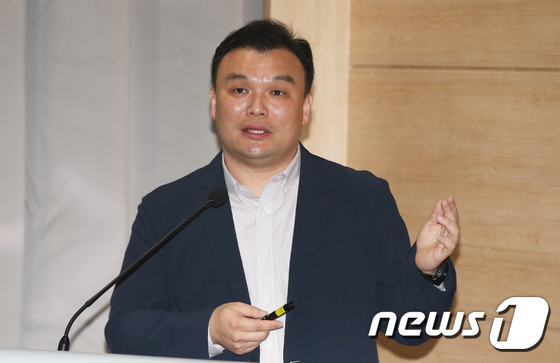
While Naver did release a video showcasing the Mininoid robot walking on a treadmill, they stopped short of unveiling the physical robot to the public.
Kim’s optimism was echoed by Naver Labs CEO Seok Sang-ok, who in October last year confirmed Mininoid’s existence and projected that the robot would be roaming the corridors of the Naver 1784 building by year’s end.
This isn’t the first time Naver has grappled with delays in its humanoid robot timeline. The company had initially set its sights on conducting performance verification for Mininoid in July. However, this crucial milestone has remained elusive, even as the year drew to a close.
A Naver spokesperson provided an update, stating that it is currently conducting rigorous tests on Mininoid within the 1784 facility. Its goal is to have Mininoid operational and performing delivery services alongside the other robots in the building by the end of this year.
Given Naver’s position as the trailblazer in humanoid robot development within South Korea’s tech sector, the ongoing delays have left many industry observers disappointed. This sentiment is compounded by the fact that companies who entered the race later than Naver have begun to showcase notable achievements.
A prime example is Hyundai Motor Group (Hyundai), which made waves at this year’s Consumer Electronics Show (CES) by unveiling the Atlas humanoid robot, developed by Boston Dynamics. This showcase of world-class technology catapulted Atlas to the title of Best Robot at CES 2026. The market responded enthusiastically, with Hyundai’s stock price surging to an all-time high of 350,500 KRW (about 239 USD) on January 7, marking a 13.80% increase from the previous trading day.
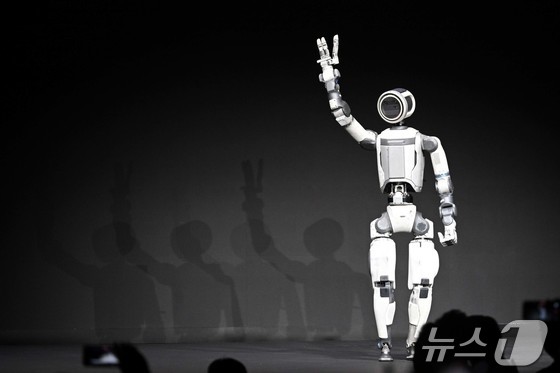
It’s worth noting that Hyundai’s acquisition of Boston Dynamics from SoftBank, finalized in late 2020 for approximately 1.057 trillion KRW (about 721.1 million USD), came after Naver had already initiated its humanoid development efforts.
An industry insider offered a nuanced perspective that considering Naver’s 2 trillion KRW (about 1.36 billion USD) acquisition of Poshmark, the North American second-hand trading platform in 2022, it’s clear that Naver’s investment capacity isn’t lacking. However, there are growing murmurs of doubt within Naver regarding Naver Labs’ development capabilities. It may be time for a comprehensive reassessment of Naver’s physical artificial intelligence (AI) strategy.