

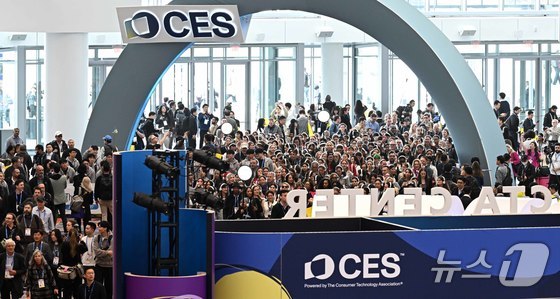
The world’s largest electronics and information technology (IT) exhibition, the 2026 Consumer Electronics Show (CES), concluded its four-day run, leaving a trail of buzz in its wake. The event was widely seen as a showcase of China’s dominance across nearly every sector, from household appliances to cutting-edge humanoid robots.
Nevertheless, over 1,000 South Korean companies, including tech giants Samsung Electronics, LG Electronics, and Hyundai Motor Group, managed to captivate attendees with their impressive technological prowess and innovative concepts. Notably, Hyundai Motor Group’s Atlas and LG Electronics’ CLOiD made significant impressions in the field of physical artificial intelligence (AI), a major focal point of this year’s CES. Samsung Electronics’ Micro Red, Green, Blue (RGB) television (TV) and LG Electronics’ 9mm (about 0.35 inches) Wireless Wallpaper TV further cemented South Korea’s position as a global leader in display technology.
Chinese Humanoids Dominate in Quantity, South Korean Atlas and CLOiD Shine in Sophistication and Practicality
The CES 2026 venue transformed into a battleground for physical AI. Chinese firms flooded the exhibition with humanoids and service robots, overwhelming all other countries in sheer numbers. From fledgling startups to industry giants, dozens of robots were on display, some performing crowd-pleasing stunts like kickboxing, jump rope, and dance routines. Chinese humanoids such as Arone and Walker X highlighted their agility and versatility, engaging audiences with interactive demonstrations. Their competitive pricing and diverse forms hinted at the potential for widespread adoption.
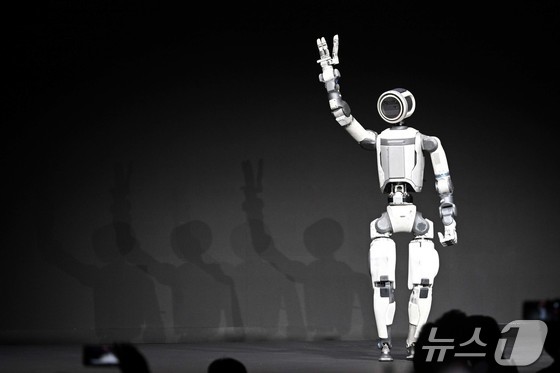
However, South Korean robots earned high marks for their technical refinement and real-world applicability. Boston Dynamics, a robotics subsidiary of Hyundai Motor Group, unveiled a next-generation Atlas model at CES, showcasing precise locomotion, balance control, and obstacle recognition capabilities.
The robot’s ability to balance on one leg and navigate stairs and ramps demonstrated human-like mobility, leaving spectators in awe. The integration of advanced sensors, actuators, and AI-driven motion learning technology suggested that industrial and logistics humanoid robots could soon be deployed in real-world settings.
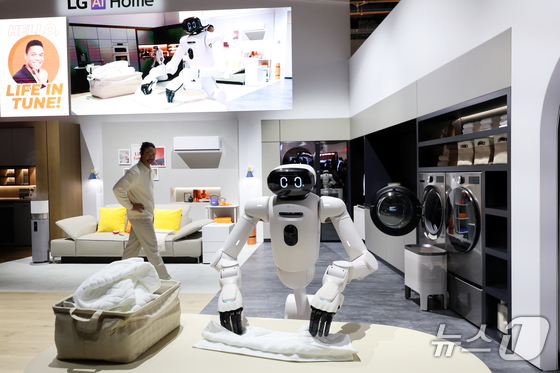
LG Electronics’ CLOiD, designed as a lifestyle-oriented service robot, demonstrated impressive capabilities in voice and facial recognition, environmental analysis, and household assistance. In a CES booth simulating a real home environment, CLOiD performed tasks such as organizing laundry, providing guidance, and delivering items, emphasizing its user-centric design.
LG Electronics highlighted its Zero Labor Home strategy, painting a picture of a future where robots handle repetitive household chores, underscoring the company’s edge in practical and user experience-focused design.
While Chinese firms emphasized price competitiveness and diverse forms to promote mass robot adoption, South Korean robots stood out for their stability, precise control, and designs tailored for real-world scenarios. Global AI leaders identified physical AI as a new technological frontier, with South Korean humanoid robots earning praise for their concrete technological implementation and real-world applicability.
Samsung’s Micro RGB and LG’s 9mm Wallpaper TVs Shine Despite Chinese Competition
While television has long been a stronghold for South Korean companies, this year’s CES showcased notable advancements from Chinese manufacturers. TCL introduced the X11L SQD Mini-light emitting diode (LED), boasting a peak brightness of 10,000 nits and 20,000 local dimming zones, setting a new benchmark in liquid crystal display (LCD) TV brightness and high dynamic range (HDR) performance.
Hisense also made waves with its RGB Mini-LED technology, demonstrating significantly improved color reproduction and contrast in traditional LCD TVs. Innovations like RGB+CY (including cyan) color expansion technology garnered consumer interest and highlighted the technological trajectory of Chinese TV makers.
Despite the evident progress of Chinese TV companies, Samsung Electronics and LG Electronics reaffirmed their dominance in the global premium TV market.
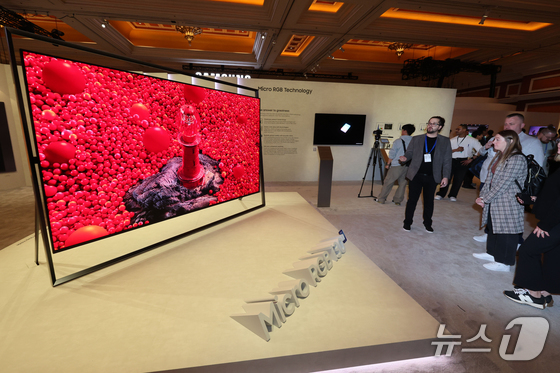
Samsung’s Micro RGB TV series, leveraging RGB micro LED technology, achieved a wider color gamut and more precise brightness control compared to conventional Mini-LEDs, establishing itself as a standout premium TV at CES. The 130-inch model, in particular, earned high praise for its vibrant color reproduction and AI-enhanced picture quality, even on its massive screen.
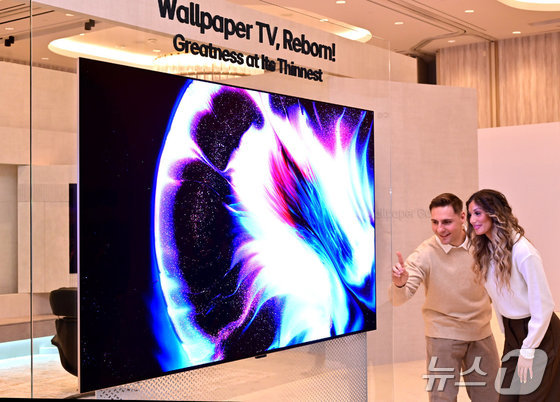
LG’s 9mm Wireless Wallpaper TV (W6) combined the world’s thinnest OLED TV design with the convenience of wireless connectivity (Zero Connect Box), Hyper Radiant Color technology, and the Brightness Booster Ultra feature. This fusion of cutting-edge display technology and sleek design garnered significant attention. The TV boasted a 3.9-fold increase in brightness and received accolades for its superior screen quality in real-world viewing conditions.
Notably, it excelled in brightness, color accuracy, and ease of installation in practical settings, reinforcing South Korea’s leadership in the premium TV market.
In the end, South Korean companies maintained their competitive edge in the TV market through premium product strategies and advanced AI-based video processing technologies. While Chinese manufacturers bolstered their mass-market appeal with high-brightness, expanded color technologies in LCD TVs, Samsung Electronics and LG Electronics captured the attention of global audiences and experts alike with superior color accuracy, AI features, and seamless design integration.