

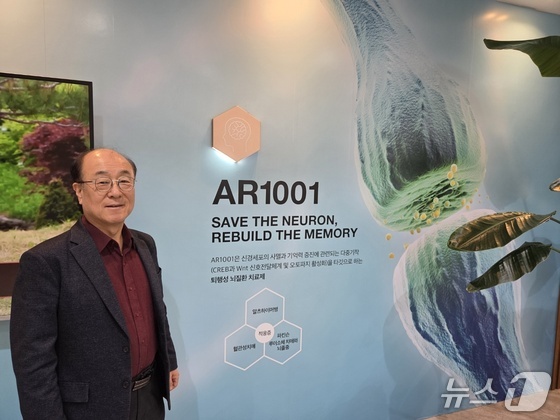
AriBio is developing an oral Alzheimer’s drug called AR1001 based on a novel multi-mechanism paradigm. As a biotech venture focused on clinical development, the company is dedicating its research and development (R&D) efforts to creating a global blockbuster treatment for Alzheimer’s.
On Thursday, Ha Jae-young, AriBio’s Vice President of Research & Business Development (R&BD), detailed the unique features of the oral Alzheimer’s treatment AR1001 at the company’s headquarters in Seongnam, Gyeonggi Province.
According to Ha, 41 new drugs have been approved in South Korea over the past 27 years. However, the country has yet to produce a blockbuster drug generating over 1 trillion KRW (approximately 690 million USD) in annual revenue.
Vice President Ha expressed his ambition to complete AR1001’s Phase 3 clinical trial and data analysis this year, with the goal of introducing a homegrown blockbuster drug to the global market by 2027.
Injectable Alzheimer’s Treatments Face Limitations in Patient Convenience; Oral Medication Emerges as a Viable Alternative
Industry sources report that the global Alzheimer’s treatment market has reached a turning point with the introduction of biopharmaceuticals like Lecanemab and Donanemab. While injections effectively target amyloid beta, a protein linked to dementia, they can have side effects that hinder consistent administration.
Antibody injections struggle to penetrate brain neurons due to their large molecular size, primarily acting to remove protein plaques accumulated outside the cells. The treatment regimen requires patients to visit hospitals every 2 to 4 weeks for 1 to 3-hour infusions.
Ha noted that with the rising number of dementia patients in South Korea, widespread use of injectable treatments could significantly strain the national healthcare system. An oral medication offering both convenience and cost-effectiveness could be a game-changer in dementia management.
AR1001 Easily Penetrates Brain Neurons; Safety Crucial for Lifelong Medication
Ha explained that as a small-molecule compound, AR1001 can easily cross the blood-brain barrier due to its low molecular weight. It not only blocks toxic protein production by interacting with mitochondria and autophagy but also significantly boosts brain-derived neurotrophic factor (BDNF), which protects brain cells.
AR1001 is also expected to enhance synaptic plasticity between neurons through the Wnt signaling pathway, contributing to its multi-faceted therapeutic approach.
Vice President Ha emphasized that AR1001’s chemical structure differs from similar existing drugs, with over ten times better drug binding affinity. This allows for lower dosages. Importantly, it poses no risk of retinal side effects, making it a safer option for lifelong Alzheimer’s treatment.
AriBio is currently conducting a global Phase 3 clinical trial for AR1001, named PolarisAD, involving 1,535 early-stage Alzheimer’s patients across 239 clinical centers in 13 countries.
The Phase 3 trial has surpassed a 90% administration rate and is nearing completion. Ha projects that the last patient will complete treatment around June, with key clinical results expected to be announced in the third quarter of this year following thorough data analysis.
Ha expressed optimism about the trial’s success, citing positive trends from blind integrated data analysis. Existing drugs have shown that after one year of treatment in Phase 3 trials, an average of 37.7% of patients across placebo and treatment groups either maintained or improved their condition.
Ha noted that in the ongoing AR1001 trial, blind data analysis from 438 participants using the same methodology estimates this proportion at about 41.8%. Despite including a placebo group, it is seeing encouraging trends compared to existing approved drugs, raising expectations for final efficacy validation.
Anticipating Swift Approval Through Global Licensing and U.S. Regulatory Programs
AriBio is preparing for global commercialization alongside AR1001’s clinical research. The company has secured exclusive sales agreements in regions including China and the Middle East, as well as with Samjin Pharmaceutical in South Korea.
Vice President Ha revealed that they’re in active discussions with global pharmaceutical companies regarding licensing rights for major markets in North America, Europe, and Japan.
AriBio aims to leverage U.S. regulatory programs for expedited approval. The company is targeting the National Priority Voucher (NPV) program, which supports rapid approvals for treatments addressing serious health crises or unmet medical needs.
Ha stated that given that dementia is a severe public health crisis, it believes the multi-mechanism oral treatment AR1001 can meet the program’s requirements. It plans to submit our new drug application immediately after successfully completing Phase 3, aiming to introduce a global blockbuster drug that showcases South Korea’s pharmaceutical process.
Profile of Ha Jae-young, Vice President of R&BD at AriBio:
△ Former CEO of Oxbridge Pharma, UK △ Former Vice President of Global Marketing & Sales at Mavena, Switzerland △ Former Director at the Swiss Red Cross △ Former Regional Head for Eastern Europe at Novartis, Switzerland △ Bachelor’s and Master’s degrees in Pharmacy from Seoul National University.