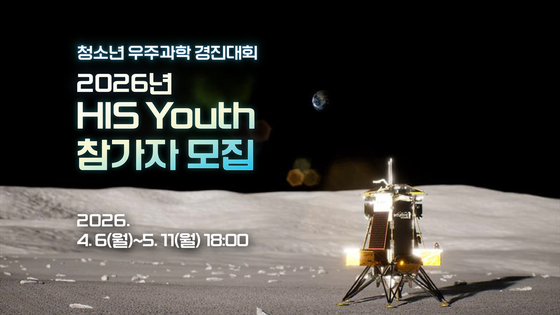
Boryung announced on Thursday that it will launch a project to send works created through the youth space and space medicine program Humans In Space Youth (HIS Youth) aboard a lunar lander.
HIS Youth is an educational program initiated by Boryung to nurture future talent in space life sciences. Now in its third year, the program is accepting submissions until 6:00 p.m. (Korean time) on May 11 through the Korea Foundation for the Advancement of Science and Creativity’s website. This year’s theme is Medicine needed for lunar exploration.
The project will collaborate with the American space company Intuitive Machines on its lunar exploration mission, IM-3. Boryung plans to include a digital storage device containing winning entries and video messages from winners in a Luna Time Capsule. This capsule will be sent to the moon later this year via Intuitive Machines’ Nova-C lander.
The Luna Time Capsule is designed as a digital archive that future astronauts visiting the moon can access. It symbolizes a connection between future generations and the present.
For this year’s HIS Youth competition, elementary school students will submit artwork focusing on space and human health.
Middle and high school students will participate in a research proposal competition addressing potential challenges in space.
Selected elementary students will have the unique opportunity to send their works into space. Middle and high school students will receive support for tours of space-related organizations and companies, including the National Aeronautics and Space Administration (NASA) and Axiom Space, along with mentorship from local experts.
Boryung Chief Executive Officer (CEO) Kim Jeong-kyun stated that the HIS Youth program is an educational initiative that allows future generations to imagine and engage with the connection between space and life sciences. The creativity and messages of children will contribute to future space exploration and become a meaningful part of South Korea’s journey to the moon.
It’s worth noting that the winning works from the elementary category in 2024 were previously sent to the International Space Station (ISS) through Axiom Space’s private crewed space mission, Ax-4.