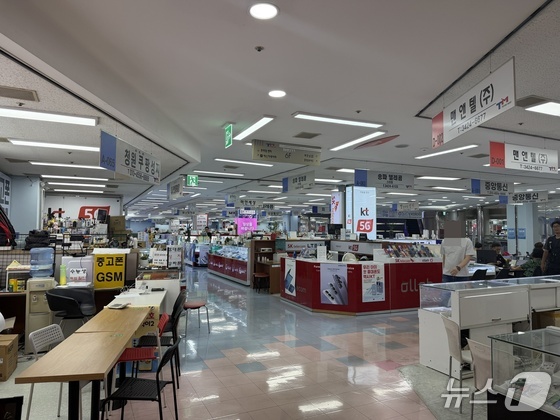
Facial recognition for phone activation? I completed the process without any such step. Mr. Choi, a man in his 60s whom I met at Gangbyeon Techno Mart in Gwangjin-gu, Seoul, around 2:00 p.m. (Korean time) on Monday, said he didn’t go through any facial recognition phase when activating his mobile phone. Despite reports that facial recognition would become mandatory from that day, the atmosphere on the ground suggested little noticeable change in the system.
Consumers are already voicing concerns about the accuracy and convenience of facial recognition technology. Mr. Jung, a man in his 50s who came to Gangbyeon Techno Mart to purchase a phone, expressed his frustration. Some banks have started using facial recognition, but the failure rate is high, causing a lot of hassle, he said. It’s worried that activating mobile phones will become more complicated now.
Retailers are equally conflicted about the new system. Mr. Kim, who has been selling mobile phones at Sindorim Techno Mart in Yeongdeungpo-gu, Seoul, for seven years, said he hasn’t noticed any changes yet but is concerned about potential impacts on future sales.
It gets customers from all over the country. If facial recognition becomes mandatory, it could be a real obstacle, Kim sighed. From a business perspective, the penalties for identity theft are so severe that there’s a tendency to avoid the new system altogether.
Both on-site staff and users seemed unclear about whether facial recognition was truly mandatory. Meanwhile, civic groups issued strong statements condemning the implementation of facial recognition, arguing that it infringes on human rights.
The confusion and minimal perceived changes on the first day of implementation stemmed from the fact that the ‘mandatory facial recognition’ was somewhat different from what was initially reported.
Originally, government authorities, including the Ministry of Science and Information and Communications Technology (ICT), the Ministry of the Interior and Safety, and the National Police Agency, pushed for facial recognition to prevent crimes like voice phishing facilitated by burner phones created through identity theft.
However, following recommendations from the Personal Information Protection Commission and the National Human Rights Commission to establish alternative authentication methods, the focus shifted to implementing a multi-authentication system that includes facial recognition.
To clarify, it’s not facial recognition alone that’s mandatory, but rather a ㅡulti-authentication system requiring at least two different methods of identity verification, which may include facial recognition.
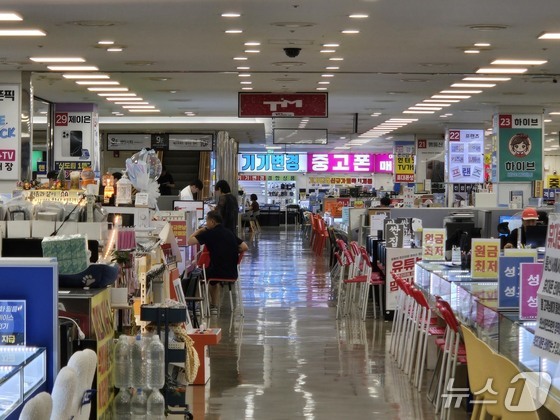
Kim Jun-mo, a section chief at the Ministry of Science and ICT, explained that as of Monday, it has introduced a system that allows for multi-authentication, including facial recognition, during mobile phone activation. The mandatory phase for actually using multi-authentication will begin in October.
This phased implementation also aims to give telecom companies time to adjust their systems. A representative from a mobile carrier stated that they’re distributing informational flyers to raise awareness about the new system, but it needs more time to enhance the internal systems for stable phone activations using multi-authentication.
On the flip side, some early adopters of facial recognition activation had positive experiences. A college student in their 20s, who activated their phone using facial recognition at Sindorim Techno Mart, said that it was their first time using facial recognition for activation. The process was quick and very convenient. It didn’t even need to take their identification (ID) out of their wallet.
Meanwhile, the Ministry of Science and ICT plans to actively expand the multi-authentication system to prevent financial and communication crimes stemming from burner phone registrations and identity lending.
Kim Jun-mo emphasized that in August, it plans to announce additional authentication methods as alternatives to facial recognition. Given the ongoing civil crimes involving mobile phones, it’s committed to establishing a robust infrastructure for the multi-authentication system.