


On Monday, the Korea Advanced Institute of Science and Technology (KAIST) announced a breakthrough in physical artificial intelligence (AI). A research team led by Professor Yoon Sung-Ui from the School of Computing has developed core technologies that integrate light-matter interactions, spatial awareness, future prediction, and action planning.
The innovative technologies include: • A system for accurately identifying transparent objects like glass and water • A method to analyze light-matter interactions for environmental comprehension • A technique enabling robots to navigate using a single image • An algorithm for predicting future scenarios and planning actions
These advancements allow AI to perform the complete cycle of perception, understanding, prediction, and action planning, mirroring human cognitive processes.
While humans can easily distinguish between reflections and objects behind glass, traditional AI often struggles with this task, perceiving both as a single image.
The new technology enables AI to accurately interpret scenes in transparent environments, linking visual data to physical actions for autonomous navigation. It can also predict outcomes and optimize movements, much like a human would.
This breakthrough is expected to be pivotal for next-generation autonomous systems, including service robots and self-driving vehicles.
Professor Yoon explained that this research showcases AI’s evolution from mere visual processing to comprehending the real world, predicting future events, and making autonomous decisions. It hopes this advancement will drive progress in various physical AI applications, from autonomous vehicles to humanoid robots operating in real-world settings.
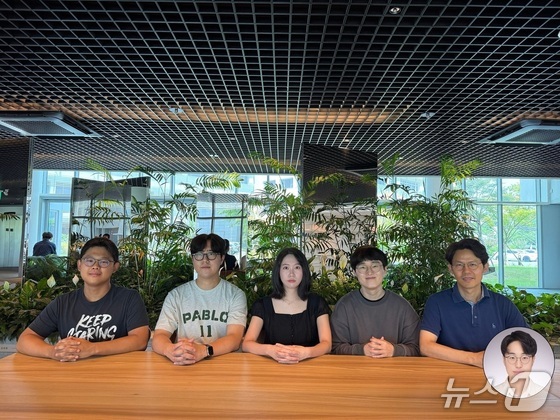
Looking ahead, the team plans to develop more sophisticated physical AI that combines world modeling, future prediction, and action planning. Their ultimate goal is to create embodied AI capable of continuous learning and self-evolution across diverse environments.
This research, with Professor Yoon as the corresponding author, is part of a larger initiative on physical AI and intelligent robotics. It’s funded by South Korea’s Ministry of Science and Information and Communications Technology (ICT), the Institute for Information & Communications Technology Planning and Evaluation (IITP), and the National Research Foundation of Korea (NRF).
The team’s findings were presented in four papers at the prestigious AI conferences International Conference on Learning Representations (ICLR) 2026 and Conference on Computer Vision and Pattern Recognition (CVPR) 2026, including two oral presentations and two highlight papers.