

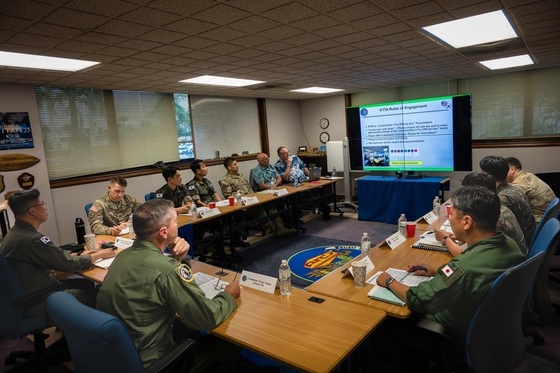
U.S. and South Korean forces conducted integrated air defense training in Hawaii this month, with the Japan Air Self-Defense Force observing for the first time.
According to U.S. and South Korean Air Force officials, the U.S. Pacific IAMD Center held the 6th U.S.–Republic of Korea (ROK) Tabletop Academy (KTTA) from July 14-25 at Joint Base Pearl Harbor-Hickam.
The exercise involved multiple branches including the U.S. and South Korean Air Forces, the U.S. Army, the Pacific Fleet, and the Space Force. It took the form of a tabletop exercise (TTX) to discuss scenarios and develop response strategies.
KTTA serves as a crucial training platform for the U.S. military to enhance air and missile defense capabilities alongside South Korea and regional allies, thereby bolstering joint defense posture and interoperability.
The participation of Japan’s Air Self-Defense Force as an observer marks a significant step in deepening trilateral security cooperation in the Indo-Pacific region.
Japan’s observer status was decided during last year’s 5th KTTA, following commitments made at the Camp David U.S.-Japan-Korea Trilateral Summit in August 2023 to regularize training against North Korean threats. Japan took part in portions of the event and received shared materials from U.S.-South Korean presentations.
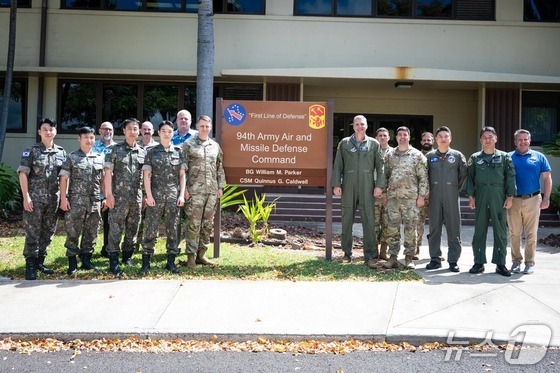
U.S. Emphasized Enhanced Deterrence Across All Domains, While South Korean Highlighted the Exercise’s Role in Deterring North Korean Provocations.
Colonel Matthew Belote from the U.S. Pacific IAMD Center stressed the importance of integrating allied perspectives to strengthen deterrence and operational effectiveness. Col. Kang Tae In of South Korea’s Air Force Missile Defense Command stated that the exercise itself serves as a deterrent against North Korean provocations.
The first week focused on operational briefings, integrated defense design, and theater-level air defense operations, with the Hawaii National Guard facilitating theater operation resilience command and control training.
The second week featured scenario-based simulations using advanced models to verify the practical applicability of integrated air and missile defense operational responses.
Participants also toured the USS Shiloh and attended an event at the USS Arizona Memorial, reinforcing their commitment to security cooperation.
Col. Belote emphasized their integrated capabilities as a strategic necessity, stating that the event enhances integrated air defense planning and ensures a unified posture during critical moments.
Prior to KTTA, the U.S. Pacific IAMD Center conducted an integrated air and missile defense TTX with South Korean naval forces from April 28 to May 2, focusing on interoperability against complex threats, including North Korean missiles and space launch vehicles.