

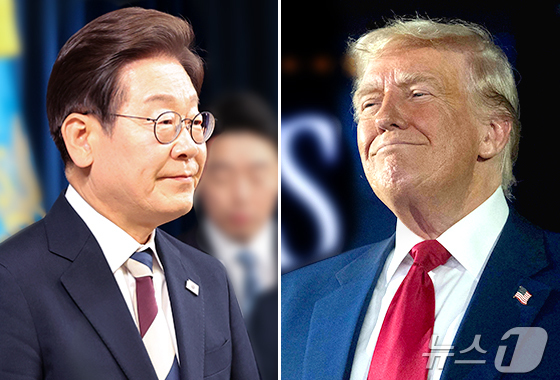
Victor Cha, the Korea Chair at the Center for Strategic and International Studies (CSIS) in Washington, D.C., has warned of potential North Korean provocations next week during the summit between President Lee Jae-myung and President Donald Trump.
During an online briefing hosted by CSIS on Wednesday, which focused on the U.S.-South Korea summit, Cha stated that it can’t rule out the possibility of North Korean action next week. He explained that this possibility arises from three converging factors: the summit, U.S.-South Korea joint military exercises, and the absence of dialogue between North Korea and the U.S.
Cha added, when these factors align, their empirical research suggests it’s not a good sign. Further noting that it typically leads to significant provocations from North Korea. He predicted a high likelihood of missile launches or even nuclear tests.
Expressing concern, Cha noted that North Korea is determinedly progressing toward securing a survivable nuclear force, even suggesting that Russia might be assisting in this goal.
Cha also revealed that they’re currently analyzing satellite imagery of undisclosed North Korean missile bases. Adding that, a report will be released soon focusing on Intercontinental Ballistic Missile (ICBM) bases believed to be near the Chinese border.
Sydney Seiler, a senior advisor at CSIS, reminded participants that North Korea has entered its summer training cycle with its 1 million-strong People’s Army. He suggested that this period might witness displays of military force, missile launches, or artillery demonstrations, although these actions are unlikely to pose lethal or physical threats.
Seiler added that Russia is currently supporting North Korea’s ability to ignore, provoke, threaten, and intimidate South Korea and the U.S. He expressed hope that the two leaders would discuss this issue during the upcoming summit.
Participants in the briefing identified trade deficit reduction as a key agenda item for President Trump at the U.S.-South Korea summit.
Philip Luck, director of CSIS’s Economic Program, stated that given the tendencies of the Trump administration, he’s certain the significant U.S.-South Korea trade deficit will increase. Further noting that it increased by 30% to 18 billion USD in 2024, which is substantial.
Luck continued that South Korea’s heavy reliance on Chinese intermediate goods is evident across various sectors, including shipbuilding and raw materials for key industries. He predicted that addressing this dependency would be a top priority for the U.S. in the near future.
Luck highlighted batteries, shipbuilding, and semiconductors as areas with great potential for productive dialogue. He emphasized that South Korea has demonstrated genuine willingness to play a significant role in these industries, making it key to solidifying a 300 billion USD investment framework with the U.S.
Concerns also emerged regarding Trump’s unpredictability on security issues.
Katrin Katz, a visiting fellow at CSIS, addressed questions about potential agreements on strategic flexibility, which implies an expanded role for U.S. troops in South Korea. She noted that it’s unclear what Trump specifically aims to achieve in the realm of security. She added that while the Department of Defense has clear goals, it’s hard to predict to what extent he’ll reflect these at the summit.
Regarding potential U.S. troop reductions, Cha commented that it’s uncertain whether Trump will pursue this. He continued by saying that from the perspectives of both South Korean and U.S. alliance management, such measures should not be unilateral but rather part of broader consultations on alliance modernization.
Experts also predicted that the U.S. would seek a clearer stance from South Korea on potential conflicts with China, particularly concerning the Taiwan Strait.
Cha noted that Department of Defense officials around Trump will likely want clearer commitments from South Korea in preparing for potential emergencies with China.
Commenting on President Lee’s decision to visit Japan before the U.S., Katz suggested that Trump is unlikely to be displeased. However, she cautioned that giving the impression of a united front between Japan and South Korea in U.S. negotiations would not serve the interests of either country.