

Analysis on Monday indicates that North Korea’s primary intelligence agency targeting South Korea, the Reconnaissance General Bureau, has undergone significant expansion and restructuring. Intelligence sources reveal that it is now operating under the name Reconnaissance Information Bureau, with enhanced capabilities in intelligence gathering and analysis.
During a routine press briefing Monday, Unification Ministry spokesperson Koo Byeong-sam stated that recent North Korean media reports have confirmed, for the first time, the existence of an agency called the Reconnaissance Information Bureau. Further noting they assess this to be an expanded and restructured version of the former Reconnaissance General Bureau.
The Workers’ Party’s official newspaper, Rodong Sinmun, published a statement from Pak Jong-chon, Vice Chairman of the Party’s Central Military Commission, condemning recent joint military exercises conducted by South Korea, the U.S., and Japan.
Pak stated that he has received intelligence from the Reconnaissance Information Bureau that the nuclear operational exercise Iron Mace and the multi-domain joint military exercise Freedom Edge will be conducted simultaneously on the Korean Peninsula and surrounding areas, involving U.S. forces and their allies. This marks the first official mention of the Reconnaissance Information Bureau in North Korean media or government statements.
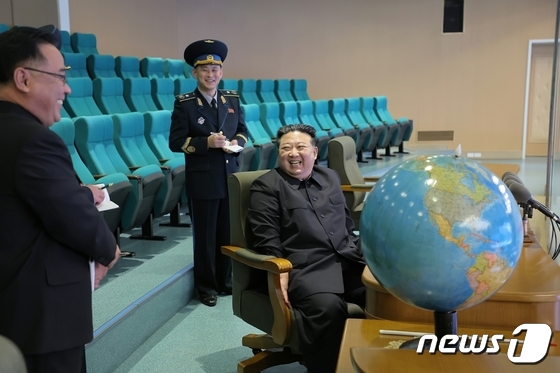
Koo further noted that North Korea began operating military reconnaissance satellites in November 2023 and that they are closely monitoring the possibility that they have enhanced their foreign intelligence gathering and analysis capabilities in conjunction with this development. This suggests that the Reconnaissance Information Bureau is likely involved in managing these new satellite assets.
The Reconnaissance General Bureau, infamously linked to the 2010 sinking of the South Korean warship Cheonan, was established in 2009. It consolidated various military and intelligence entities—including the People’s Army’s Reconnaissance Bureau, the Workers’ Party’s Operations Department, and the Party’s 35th Office (Foreign Intelligence Department)—under the General Staff of the Korean People’s Army. Kim Yong-chol, the former head of the United Front Department who participated in denuclearization talks in 2018, is widely considered the architect behind the Cheonan incident.
Pyongyang’s recent actions appear to align with its new policy of treating inter-Korean relations as hostile bilateral relations. Following a December 2023 Workers’ Party plenary meeting at which North Korea announced a shift in its approach to South Korea, the regime has systematically dismantled or reorganized longstanding channels for inter-Korean dialogue, including the United Front Department and the Committee for the Peaceful Reunification of the Fatherland.
Conversely, North Korea has intensified its intelligence operations and provocative activities against South Korea. This strategy seems designed to reinforce an antagonistic stance domestically while preparing for potential high-intensity provocations in the event of a crisis.