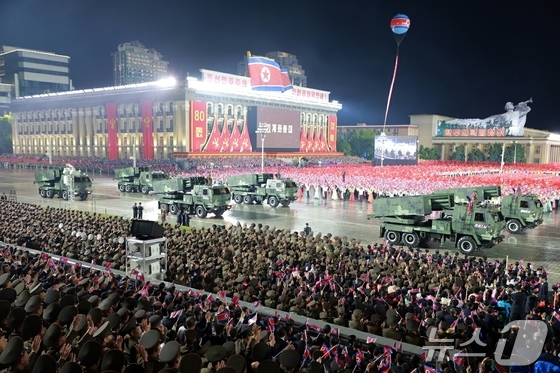
On October 10, analysts noted that North Korea’s military parade commemorating the 80th anniversary of the Workers’ Party primarily showcased precision strike weapons, seemingly in response to U.S.-South Korean missile and air defense capabilities.
Hong Min, a senior researcher at the Korea Institute for National Unification, reported that the parade held in Kim Il Sung Square on the 10th ranks as the third largest in history in terms of overall participation and scale.
The parade featured 72 units, including 60 infantry units and 12 mechanized units. Each infantry unit consisted of 288 personnel, totaling an estimated 17,280 participants; with the addition of mechanized units, the overall number is believed to have exceeded 18,000.
This event ranks as the third largest in history, comparable to the April 25, 2022 parade celebrating the 75th anniversary of the Korean People’s Revolutionary Army—which comprised 72 units and over 20,000 participants—while only the April 15, 2017 parade, with 85 units, surpassed it in scale.
A notable addition to this parade was the debut of a sniper unit equipped with ghillie suits designed to evade thermal detection and drone surveillance. Another first-time appearance was a foot unit from the Defense Science Institute, led by its director, Major General Kim Yong-hwan.
While the parade displayed fewer weapons compared to previous events, it focused on showcasing the latest achievements of the five-year defense development plan.
Significant emphasis was placed on precision strike weapons, including short-range ballistic missiles capable of carrying nuclear warheads, strategic cruise missiles for both ground and maritime use, hypersonic cruise missiles, and intermediate-range hypersonic missiles.
A new 22-tube rocket launcher was unveiled, featuring a larger caliber and shorter launch tubes compared to the existing 240mm (about 9.5 inches) system.
Hong speculated that these modifications likely involve increased warhead weight, range adjustments, and enhanced guidance capabilities, suggesting that this could be a new variant not yet publicly tested.
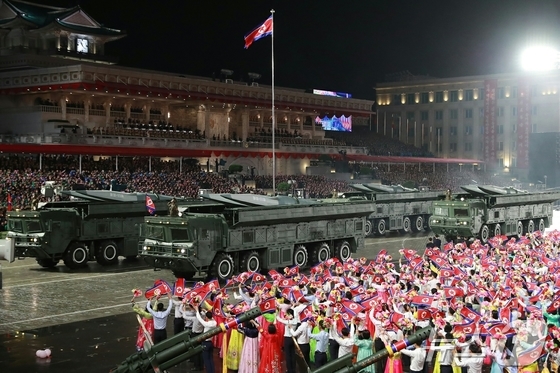
Hong identified the Hwasong-11ma as the most controversial weapon in the parade. This missile appears to be a modified version of the existing Hwasong-11A (KN-23, North Korea’s Iskander variant), now fitted with a hypersonic glide vehicle (HGV) style terminal section.
He interpreted this as North Korea’s attempt to incorporate hypersonic technology into short-range ballistic missiles (SRBMs), likely aiming to send a strong psychological and strategic message about enhanced tactical evasion capabilities.
Hong emphasized that the weapons displayed are designed to serve as key deterrents against U.S. strategic assets and bases on the Korean Peninsula, in Japan, and on Guam—capable of evading interception while delivering precision strikes.
This display appears intended to demonstrate North Korea’s capabilities against U.S. naval assets and the U.S.-South Korean missile defense systems, while also suggesting an intent to showcase preemptive and retaliatory strike capabilities as well as maritime and aerial denial strategies.
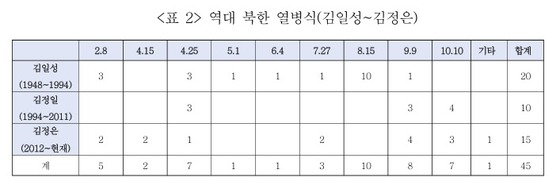
Since taking power, Kim Jong Un has held 15 military parades, including eight nighttime parades since 2020. This frequency surpasses that of his predecessors, with Kim Il Sung holding 20 parades and Kim Jong Il conducting 10 during their respective eras.