

President Donald Trump has consistently sent messages tailored to North Korea’s preferences. After referring to North Korea as a nuclear power, he has now indicated that discussions about easing sanctions could be possible as he eagerly prepares for his visit to South Korea on Wednesday with the goal of meeting Secretary Kim.
On Monday, while en route to Japan, President Trump reiterated his desire to meet with Secretary Kim during his upcoming visit to South Korea. When asked about potential offers to North Korea for negotiations, he replied that it has sanctions, emphasizing that this is a significant bargaining chip. This suggests he intends to use the prospect of easing or lifting sanctions as leverage to bring North Korea to the negotiating table.
The United Nations (UN) Security Council and various countries have imposed their own sanctions aimed at exerting economic pressure on North Korea by effectively restricting trade, investment, and humanitarian aid. The first Security Council resolution imposing sanctions was adopted in response to North Korea’s missile launches in 2006 (Resolution 1695), with the most recent being Resolution 2397, announced in December 2017.
During Trump’s first term, North Korea strongly pushed for the easing of sanctions during its talks, and the two sides reportedly came close to reaching a certain level of agreement.
Prior to the second North Korea–U.S. summit on February 28, 2019, in Hanoi, working-level officials indicated that North Korea had agreed to dismantle the Yongbyon nuclear facility—a key component of its nuclear program—in exchange for the easing of major sanctions. However, the negotiations fell apart when President Trump unexpectedly demanded additional concessions beyond the dismantling of the Yongbyon facility during the leaders’ meeting.
The day after the summit’s collapse, North Korea’s then-Foreign Minister Ri Yong-ho and First Vice Minister of Foreign Affairs Choe Son-hui held a press conference revealing key details of the negotiations. They stated that North Korea had requested the lifting of sanctions related to the civilian economy and people’s livelihoods from five of the eleven UN Security Council resolutions adopted between 2016 and 2017.
This request likely pertained to various trade restrictions imposed on North Korea. Notably impactful sanctions include Resolution 2270, which prohibits the import of North Korean mineral resources and mandates the closure of North Korean banks’ overseas branches, and Resolution 2397, which imposes limits on refined oil imports.
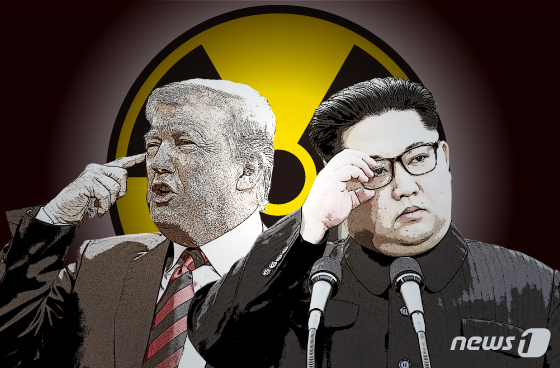
In this context, easing sanctions remains a critical issue for North Korea. However, following the collapse of the Hanoi summit, North Korea has endured for over six years by emphasizing self-reliance and has recently made some economic progress through closer ties with Russia and China. Consequently, experts believe that merely expressing a willingness to ease sanctions is unlikely to prompt immediate dialogue from North Korea.
Notably, Russia dismantled the expert panel responsible for monitoring compliance with North Korea sanctions at the UN Security Council last April. This panel typically has its term extended annually, but Russia’s opposition last year led to its dissolution.
Furthermore, Russia has supported North Korea by accepting North Korean workers and, in return, receiving North Korean troops. These actions violate existing sanctions, indicating that Russia is effectively undermining the sanctions regime against North Korea.
While President Trump appears to be increasing the number of proposals directed at North Korea, the shifting geopolitical landscape means that these offers may not seem as groundbreaking to North Korea as they might have six years ago.
Experts believe that North Korea’s top priority in negotiations is for President Trump to declare the abandonment of his denuclearization policy.
In a recent speech at the Supreme People’s Assembly, Secretary Kim stated that while they could meet if the U.S. abandons its denuclearization goal, he emphasized that there will be no negotiations that involve trading sanctions relief for anything else, and there will never be such negotiations in the future. This clearly indicates North Korea’s unwillingness to engage in the past-style negotiations that linked sanctions relief to changes in its nuclear capabilities.
However, North Korea may view President Trump’s visit to South Korea as an opportunity to establish contact with the U.S. Even if no concrete negotiations occur, they might aim to create a favorable atmosphere through political exchanges and potentially elicit additional proposals from President Trump.
Park Won-gon, a professor at Ewha Womans University, stated that Kim understands that North Korea cannot be officially recognized as a nuclear-armed state under the Non-Proliferation Treaty (NPT). Therefore, he will likely seek an approach similar to that of Pakistan and India, where existing sanctions are lifted, allowing for de facto recognition as a nuclear state. He added that under sanctions, economic development will inevitably face limitations. Ultimately, sanctions must be lifted. Trump is aware of this, and he may be dangling this as a kind of bait.