

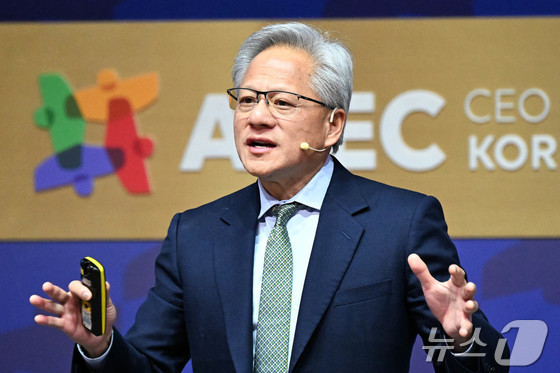
Jensen Huang, the Chief Executive Officer (CEO) of Nvidia, cautioned that China could outpace the U.S. in the artificial intelligence (AI) race, citing China’s advantages in energy costs and regulatory efficiency.
Huang highlighted China’s focus on the AI industry, leveraging two key assets: affordable energy and streamlined, effective regulations.
Speaking at the Financial Times’ Future of AI summit on Wednesday, Huang stressed that the West, including the U.S. and UK, is mired in excessive skepticism. It needs to embrace a more optimistic outlook.
He pointed out that AI-related regulations across U.S. states could potentially reach 50 different sets, expressing concern that such regulatory overload might impede technological progress.
Huang warned that an overemphasis on AI safety, ethics, and potential risks could slow innovation.
In contrast, China’s AI industry benefits from centralized, government-led coordination.
Moreover, Chinese AI firms have an edge in the energy sector, crucial for power-hungry AI systems, thanks to extensive government support.
Huang described this advantage by stating that in China, it’s as if electricity is free.
Previously, Huang argued that the latest U.S. AI models aren’t significantly superior to China’s, advocating for the U.S. to open its chip market to maintain global reliance on American technology.
As a pivotal figure in the U.S.-China tech rivalry, Huang’s assertion of China’s potential AI dominance is likely to send shockwaves through Silicon Valley and Washington.
Huang’s frank comments reflect Nvidia’s complex political and economic predicament.
While Nvidia controls over 80% of the AI chip market, its access to China, the largest market, is blocked by stringent Donald Trump’s administration export controls.
Notably, these remarks followed closely on the heels of the summit between President Trump and Chinese President Xi Jinping.
Initially, Trump suggested he might discuss Nvidia’s cutting-edge AI chip, Blackwell, with Xi. However, reports indicate this topic was ultimately sidestepped during their talks.
Post-summit, Trump emphasized that no country outside the U.S. will have access to Blackwell.
In a CBS interview following the meeting, Trump declared that it would ensure the most advanced chips are exclusively for U.S. use. While it may allow China to do business with Nvidia, access to its most advanced chips is off-limits.
Huang’s outspoken comments appear to be a direct response to Trump’s stance.