

U.S. President Donald Trump’s visit to China has been confirmed for April next year. Analysts suggest the trip could trigger major shifts in the Korean Peninsula’s geopolitical landscape, particularly by reviving the possibility of a meeting with Kim Jong Un, the General Secretary of the Workers’ Party, which was called off last month.
Trump held a phone conversation with Chinese President Xi Jinping on Monday as a follow-up to the discussions held during the U.S.-China summit at the APEC meeting in late October.
Following the call, Trump announced on Truth Social that he would visit China in April, reaffirming the schedule agreed to during last month’s summit.
The timing of Trump’s visit is particularly noteworthy, as it’s scheduled to take place after North Korea’s 9th Workers’ Party Congress, expected in January or February. North Korea convenes its party congress every five years to establish a five-year national policy plan, which typically includes significant foreign policy decisions.
Analysts are watching closely for any new stances on North Korea’s recent two hostile states rhetoric toward South Korea, its demands that the U.S. abandon denuclearization efforts, and its push for recognition as a nuclear state.
During the APEC meeting last month, Trump actively proposed a meeting with Kim Jong Un. However, neither Kim nor North Korean officials publicly responded, effectively rebuffing the proposal.
As Trump departed South Korea, he stated he would return to meet Kim Jong Un. This, coupled with the timing of his China visit after North Korea’s party congress and the anticipated U.S.-South Korea joint exercises in March, suggests he may be preparing to send another strong message to North Korea on dialogue.
Experts anticipate that the U.S. government will leverage this opportunity to pursue multifaceted diplomacy to facilitate a meeting between North Korean and U.S. leaders. While North Korea’s potential shift in foreign policy remains the key factor, Washington will likely focus on diplomatic efforts to create favorable conditions, including requesting that China exert its influence over Pyongyang.
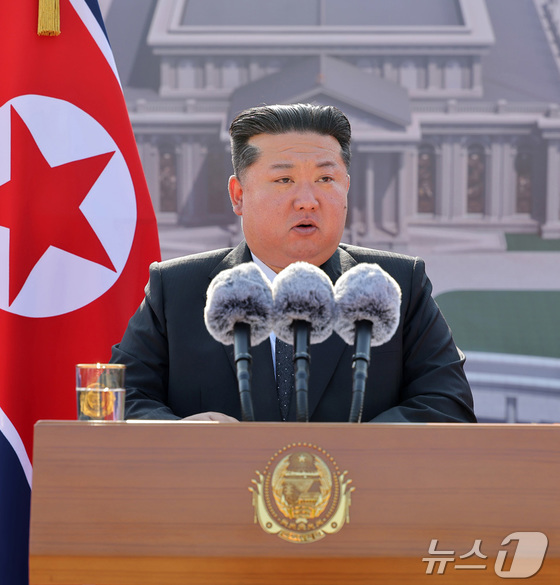
The outcome of North Korea’s 9th Workers’ Party Congress is considered the key factor in determining the likelihood of renewed U.S.–North Korea dialogue. In a speech at the Supreme People’s Assembly in September, Kim Jong Un suggested the possibility of diplomacy, saying the U.S. could meet North Korea if it abandoned what he called an unrealistic obsession with denuclearization and genuinely sought peaceful coexistence.
North Korea’s current position suggests that dialogue can only occur if the U.S. abandons its denuclearization demands and recognizes North Korea as a nuclear state. This stance appears to call for a complete departure from the 2018 denuclearization negotiation framework.
However, during last month’s summit in Gyeongju, South Korea and the U.S. reaffirmed their commitment to North Korea’s denuclearization and agreed to work toward implementing the joint statement from the June 2018 Singapore summit, making clear they would not accept North Korea’s demands.
For this reason, some analysts believe North Korea may not significantly alter its foreign strategy during the upcoming party congress. Unlike 2018, North Korea is now closely aligned with Russia and has strengthened ties with China, adopting a “time is on our side” approach, which suggests it may maintain its current stance until the U.S. position changes.
Nevertheless, experts believe that North Korea recognizes the U.S. as the country most capable of offering substantial economic rewards and ensuring regime security. With the U.S. midterm elections for Congress scheduled for November, many analysts speculate that North Korea may view next year as an opportune time to influence President Trump’s policies in its favor.
Given this context, some observers predict that North Korea might defer decisions on foreign affairs until the Workers’ Party plenary meeting in June, or withhold public disclosure of such decisions while awaiting Trump’s actions in April.