

Analysts on Monday highlighted that while North Korea is showcasing its modernization efforts centered in Pyongyang to demonstrate progress in alleviating economic hardships, the regime has yet to address fundamental issues.
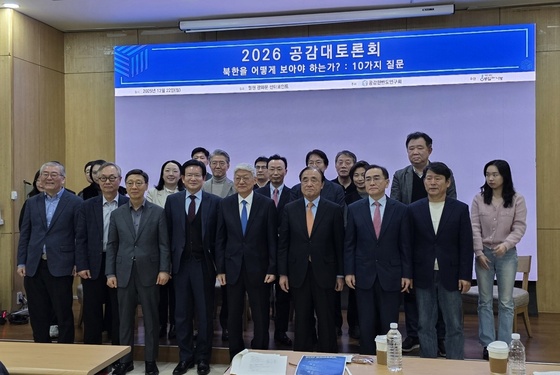
This assessment was made by experts at the 2026 Consensus Forum, titled “10 Questions: How Should We View North Korea?”, held at the Centerpoint in Gwanghwamun, Seoul.
Former Vice Minister of Unification Kim Cheon Sik observed that virtually no residents now rely on the state rationing system, describing the situation as a crisis factor for North Korean authorities. He said this shift has made it increasingly difficult for the government to maintain control over the population.
Kim noted the stark economic disparity between the two Koreas, citing UN statistics that showed North Korea’s per capita nominal GDP at around 650 USD last year, while South Korea’s reached 30,350 USD.
He also pointed out that Kim Jong Un himself publicly acknowledged economic challenges last January, indicating that North Korea is no longer concealing its fundamental economic struggles.
During an expanded meeting of the Workers’ Party Politburo last January, Kim Jong Un said that the party and government could no longer ignore the serious political issue of failing to provide local residents with even basic necessities, including essential foodstuffs, groceries, and consumer goods.
Kim emphasized that while North Korea aims to maintain economic control through the Workers’ Party while suppressing market forces, he believes this approach will ultimately face significant limitations.