

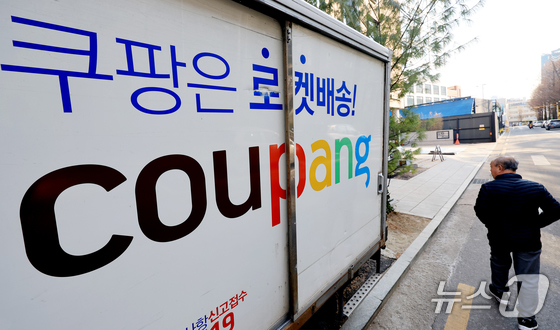
The U.S. is now invoking Section 301 of its trade law in connection with the recent Coupang incident, a measure previously used to impose tariffs on China and the European Union (EU). Given that even the initiation of investigations has served as a powerful pressure tactic in past cases, this situation could test the South Korean government’s ability to navigate complex trade risks.
The South Korean government has emphasized that its response to Coupang is not targeting a specific company but rather enforcing uniform standards based on law and principle. However, as the 45-day window for the U.S. Trade Representative (USTR) to decide on launching an investigation begins, some analysts suggest the situation could evolve depending on future developments.
Foreign media reported on January 25 that Greenoaks and Altimeter, U.S. investment firms with stakes in Coupang, have petitioned the USTR for an investigation and trade remedies under Section 301. They claim South Korea has discriminated against Coupang, violating the U.S.-Korea Free Trade Agreement (FTA). These firms have also filed a notice of intent, a precursor to international investment dispute settlement (ISDS), alleging breaches of fair and equitable treatment obligations and non-discrimination principles under the FTA.
The investors argue that following a major data breach last year, South Korean authorities launched a comprehensive crackdown that extended beyond data privacy issues into areas such as labor, finance, and customs. They contend this has eroded billions of dollars in investment value, pointing to Coupang’s significant stock price decline after the data breach disclosure.
U.S. Section 301: Previously Used For Actual Tariffs on China and EU… South Korean Government Grappling With Response
Section 301 is one of the most potent tools in U.S. trade law, permitting retaliatory measures like tariffs and import restrictions when foreign policies or practices are deemed to unfairly impact U.S. trade.
China stands out as a prime example. In 2018, the U.S. initiated a Section 301 investigation into China’s forced technology transfers and intellectual property infringements, leading to high tariffs on Chinese goods worth hundreds of billions of dollars and sparking a U.S.-China trade war.
The EU wasn’t spared either. The U.S. conducted a Section 301 probe into EU countries’ digital tax policies, particularly France’s, using the threat of tariffs to push for policy changes. In the Airbus subsidy dispute, the U.S. even imposed retaliatory tariffs on EU aircraft and agricultural products through the Section 301 process.
Trade experts emphasize that merely initiating a Section 301 investigation sends a powerful diplomatic and economic message, significantly amplifying the risks for the targeted country. If the Trump administration’s USTR leverages this as justification for protecting U.S. companies, the issue could escalate from a single corporate dispute into a full-blown U.S.-South Korea trade conflict.
Cho Sung-dae, director of trade research at the Korea International Trade Association, noted that it appears the U.S. government has been well-informed of the position and circumstances. He added that given that the nature of this issue could shift based on U.S. internal reviews and political considerations, the government must prepare a comprehensive response strategy.
Unlike China and the EU, South Korea has never faced full-fledged retaliatory measures under Section 301. Given the U.S.-Korea FTA framework and strategic alliance, the probability of Section 301 being activated against South Korea has long been considered minimal. However, Section 301 has been repeatedly mentioned as a potential pressure tactic in disputes over steel, automobiles, and currency. Some analysts argue that the Coupang case is unique because investors have directly triggered trade law procedures.
U.S. Expected to Clarify Stance on Coupang Issue By Early to Mid-March… South Korean Government Aims to Contain Trade Dispute
The USTR must decide whether to initiate an investigation within 45 days of receiving the petition. Consequently, the Joe Biden administration will need to finalize its position on the Coupang issue by early to mid-March at the latest.
Considering the potential diplomatic and economic repercussions of launching an investigation, the South Korean government is likely to focus on preventing the probe from starting or, at minimum, managing the situation to prevent it from escalating into a broader trade or diplomatic dispute.
Cho remarked that if an investigation does commence, there’s room to explain that this was merely a misunderstanding and that there was no intentional discrimination against U.S. companies. However, he cautioned that it’s challenging to predict the USTR’s decision at this stage.
An industry insider commented that this situation will test whether the South Korean government can logically justify its domestic regulations while demonstrating the diplomatic finesse and negotiation skills needed to defuse trade tensions within the framework of the U.S.-Korea alliance.