

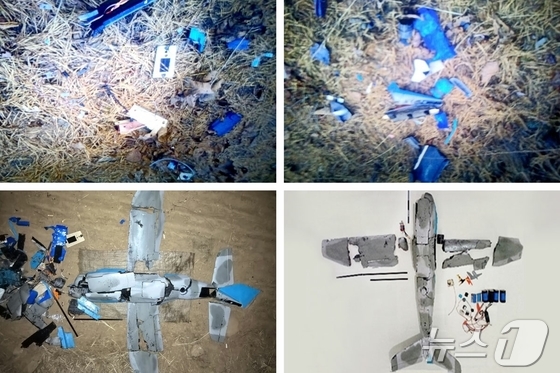
North Korea has strategically linked drone incursions from last September and early this year, demanding a thorough investigation from the South Korean government. Military analysts suggest this move is calculated to inflame anti-South sentiment among North Korean citizens and bolster the hostile two-state theory narrative, particularly as the 9th Workers’ Party Congress approaches.
The delayed disclosure of last year’s drone incidents likely stemmed from North Korea’s awareness of the dialogue momentum with the U.S. surrounding the Asia-Pacific Economic Cooperation (APEC) summit in October. Experts believe Pyongyang chose to reveal these incidents later this year due to the evaporation of prospects for both U.S.-North Korea and inter-Korean talks.
In a report titled, Comparative Analysis and Implications of North Korea’s Responses to Drone Incursions in 2024 and 2026, released on Wednesday, Lee Ho-ryeong, a senior research fellow at the Korea Institute for Defense Analysis (KIDA), asserted that North Korea’s announcement of this year’s drone incursions explicitly frames these events as sovereignty-violating provocations, aiming to underscore its anti-South stance.
Lee highlighted stark differences in North Korea’s response intensity and criticism targets compared to the October 2024 Pyongyang drone incident. During that episode, Pyongyang unleashed a barrage of eight statements over two weeks, featuring harsh rhetoric and severe condemnation of South Korea from Kim Yo-jong, Deputy Director of the Workers’ Party, along with the Foreign and Defense Ministries.
The tensions peaked on October 15 when North Korea detonated sections of the inter-Korean Gyeongui and Donghae Line railways and roads north of the Military Demarcation Line (MDL). In contrast, January’s drone incursion announcement was met with a more muted response, consisting of just three statements, including one from the General Staff spokesperson and a statement from Kim Yo-jong.
The scope of blame attribution also differed markedly. In the 2024 incident, North Korea portrayed South Korea as a U.S. puppet, emphasizing shared culpability. However, in this year’s drone incursions, Pyongyang singled out South Korea for criticism, omitting any mention of the United States.
Lee posits that North Korea’s decision to simultaneously disclose the drone incidents from last September and this year is likely tied to the APEC summit and the upcoming 9th Party Congress. The civilian drone incursions occurred amidst a flurry of high-profile diplomatic events, including the U.S.-South Korea summit, President Lee Jae-myung’s address to the UN General Assembly, and the APEC summit, which fostered a climate conducive to U.S.-North Korea dialogue. From Pyongyang’s perspective, this diplomatic thaw was not unfavorable, prompting them to withhold information on potentially inflammatory incidents.
Lee noted that had North Korea issued a statement in September, they might have preempted the January drone incident. However, their inaction seems to have been strategically motivated. Given the timing, with South Korea and the U.S. building momentum for dialogue around APEC, North Korea likely calculated that revealing the drone incidents could have unpredictable ramifications, making later disclosure a more prudent option.
The postponement of the 9th Party Congress from January to February may have also influenced North Korea’s timing on the drone incursion revelations. Pyongyang might have viewed this delay as an opportunity to shape public opinion in favor of amending party regulations based on the hostile two-state theory, a potential agenda item for the congress.
Lee concluded that as the 9th Party Congress timeline extends, North Korea appears to be leveraging this period to indoctrinate its citizens with anti-South sentiment, rooted in the hostile two-state theory. Moreover, Pyongyang seems intent on asserting that they are not merely patrolling borders but enforcing comprehensive ‘border control’ over their southern frontier across land, sea, and air domains.