

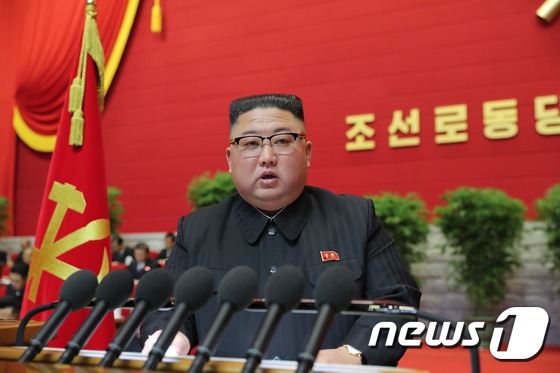
The 9th Congress of the Workers’ Party of Korea is imminent. North Korea has nearly completed procedural preparations by holding city and county party representative meetings and electing final delegates for the congress. The remaining tasks include finalizing delegate qualification reviews, confirming the schedule based on the agenda, and adopting a Political Bureau decision to announce the 9th Congress date. The month-long delay likely stems from unfinished major projects, such as the Sinuiju Greenhouse Comprehensive Farm.
Compared to the 8th Congress in January 2021, held amid prolonged sanctions, COVID-19 border closures, and severed U.S. and South Korean relations, North Korea’s current situation has markedly improved. Domestically, the country has achieved three years of economic growth, met food production targets, completed Pyongyang’s 5th-generation housing, and advanced the 20×10 Local Development Policy. Internationally, China relations have improved with trade returning to pre-COVID levels, while ties with Russia have strengthened, expanding overall exchanges.
The 9th Congress is expected to establish a new transformation phase and set detailed sector goals. Last October, Kim Jong Un outlined a long-term policy prioritizing people-centric ideology, aiming to transform everything within a decade and pursue comprehensive socialist development. This approach will likely shape the 9th Congress decisions.
In national defense, the congress will propose a dual policy of nuclear and conventional forces. Kim recently announced plans to strengthen nuclear capabilities while modernizing conventional forces for practical use.
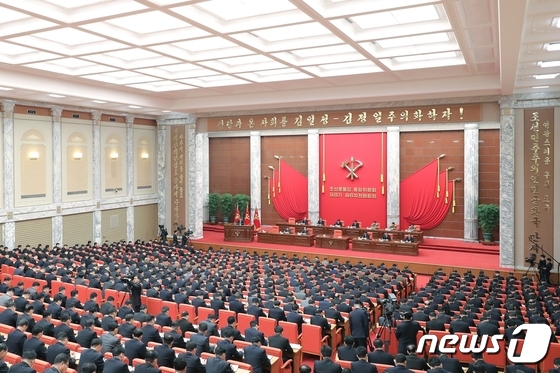
Party construction will highlight the Five Major Party Construction Lines for a New Era, adopted in December 2022. These lines aim to strengthen the party through political, organizational, ideological, disciplinary, and stylistic construction. Kim recently emphasized developing these lines vigorously, based on succession, socialist ideology, and popular leadership.
Given Kim’s recent public criticism of senior officials, the congress is likely to stress stricter party discipline, anti-corruption efforts, and a people-focused approach to enhance the party’s authority.
Economically, a five-year plan will be presented for qualitative development across all sectors. It will likely expand efforts to modernize underdeveloped regions, focusing on light industry and agriculture. Kim recently called for transforming coal mining villages and modernizing backward west coast farms.
In foreign affairs, North Korea is expected to reaffirm its commitment to a multipolar world order, aligning with China, Russia, and Vietnam against the U.S. While Kim avoided direct threats against the U.S. and South Korea publicly, internal rhetoric continues to portray them as adversaries.
The congress may either ignore the U.S. and South Korea or suggest potential for peaceful coexistence if the U.S. abandons denuclearization demands. However, North Korea will likely maintain its policy of non-engagement with South Korea.
A key focus will be changes to party regulations regarding unification and South Korea. Experts anticipate the removal or modification of all unification-related language.
The definition of the party’s immediate objectives and struggle goals is crucial. Currently, it aims to build socialism in North Korea and achieve nationwide development.
The potential removal of references to northern half and nationwide could signal North Korea’s abandonment of its long-standing interventionist policies towards South Korea.
Kim’s recent statement disavowing any intention to attack or engage with South Korea underscores this shift.
If the party regulations reflect this stance, it could lead to constitutional changes limiting North Korea’s territorial claims to areas north of the Military Demarcation Line.
Such changes in party objectives would fundamentally alter national strategies and policies, given North Korea’s party-led system.
The revision of the party regulations’ South Korea section will be a key indicator of future inter-Korean relations.