

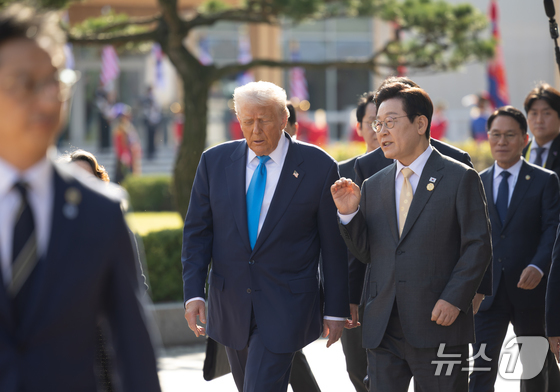
The U.S. administration is wrestling with how to counter President Donald Trump’s threats of tariff hikes. While Congress deliberates on a special law concerning Korean investments in the U.S., the government is focusing on persuading compliance with existing tariff agreements by initiating preliminary discussions and reviews of proposed investment projects.
Sources from the government and the White House revealed on Monday that officials are proactively preparing practical measures to coordinate targets, schedules, and procedures for U.S.-bound investment projects, anticipating the passage of the special law in Congress.
Although actual implementation will occur post-legislation, the aim is to have specific investment plans ready for immediate execution once the law passes.
Kim Yong-beom, Chief of the Presidential Policy Office, stated on January 28 that even before the special law passes, it is exploring preliminary review options for U.S. investment projects. It is examining all possible avenues to ensure procedures can commence immediately after the law’s enactment.
The government’s preemptive preparation for U.S. investments appears driven by concerns over potential tariff increases. This strategy aims to prevent worst-case scenarios where trade negotiations revert to square one, recognizing the urgent need to stabilize exports and trade relations.
The administration is prioritizing high-level trade discussions to dispel U.S. misunderstandings. On January 29-30, Minister of Trade, Industry and Energy Kim Jeong-kwan held two meetings with U.S. Secretary of Commerce Howard Gutman in Washington, discussing timelines for U.S. investment implementation and tariff issues.
Earlier, on January 26, President Trump criticized delays in the Korean National Assembly’s legislation of the special U.S. investment law, threatening to raise tariffs on Korean automobiles and pharmaceuticals from 15% to 25%, reverting to pre-Korea-U.S. trade agreement levels. In response, President Lee Jae Myung swiftly dispatched Minister Kim, who was in Canada securing defense industry contracts, to the U.S.
After his initial meeting with Secretary Gutman, Minister Kim cautiously stated that nothing has been concluded yet. He denied hearing any claims about the U.S. initiating processes to publish notices for tariff increases.
However, in a cabinet meeting the same day, President Trump maintained pressure, stating that U.S. tariffs are at a very friendly level and could rise significantly.
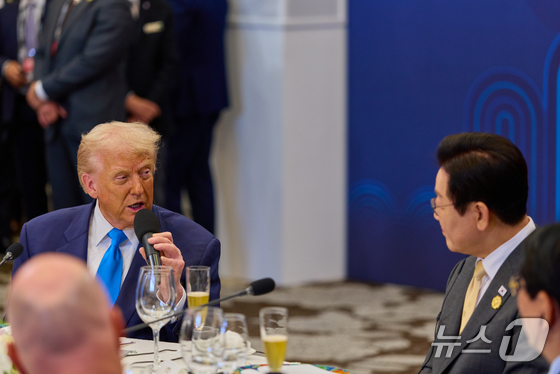
Korea to Fast-Track U.S. Investment Special Act… All-Out Effort to Win Over Washington
The Blue House believes tariff hikes would significantly burden key export industries, including semiconductors, and is mobilizing all diplomatic and trade resources. Congress is also ramping up legislative support, primarily led by the ruling party.
Han Jeoung-ae, chair of the Democratic Party’s policy committee, announced at a press conference on February 1 that it expects the special law on U.S. investment to be processed by late February or early March. It’ll strive to adhere to this schedule following standing committee discussions.
Despite these efforts, the U.S. Treasury Department continues to apply pressure by re-designating Korea as a currency monitoring target. While this doesn’t trigger immediate sanctions, it could serve as grounds for future claims of unfair trade practices regarding currency policy.
U.S. Treasury Secretary Scott Bessent stated that the Treasury is closely examining whether trade partners manipulate their currencies through foreign exchange interventions and non-market policies to gain unfair trade advantages. It is enhancing our analysis of currency policies and practices to support President Trump’s America First trade policy.