

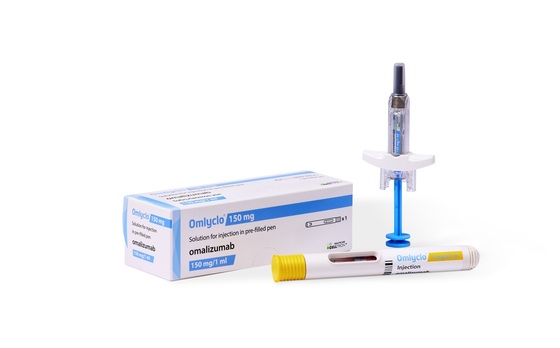
On Wednesday, Celltrion announced that its treatment for chronic spontaneous urticaria and allergic asthma, Omlyclo (active ingredient omalizumab), is gaining significant traction in Spain, one of the five major European markets in which it launched as a first mover. The company attributes this success to strong local demand and successful bidding outcomes.
Celltrion’s Spanish subsidiary secured its first major win late last year, earning top supplier status in a public tender for the Catalonia region, a key market in Spain. Catalonia, home to Barcelona, is known for its high population density and represents the largest omalizumab supply region in the country.
The recent Omlyclo contract involves a crucial public tender jointly managed by the agency overseeing procurement for Catalonia’s public hospitals and medical institutions (CSC) and the region’s largest public healthcare provider (ISC). Industry experts view this as a dual triumph, securing both market presence and symbolic importance.
Beyond Catalonia, Omlyclo is set to enter the Basque Country market. Celltrion’s Spanish arm clinched top supplier status for all public healthcare institutions in the region, finalizing a supply agreement in January.
This success demonstrates that Celltrion’s on-the-ground direct sales strategy in Europe is proving highly effective, transcending mere tender victories.
Following these back-to-back wins in two key Spanish regions, Celltrion anticipates positive ripple effects in upcoming regional tenders. The company is aggressively pursuing market leadership in Spain, having participated in omalizumab tenders in Valencia and Asturias last month.
Since launching Omlyclo through direct sales last September, Celltrion’s Spanish subsidiary has rapidly solidified its market position by winning public tenders at both state and local levels, while also expanding supply to individual hospitals.
Notably, some public and private hospitals have proactively sought pre-orders, even in the absence of formal tenders. This indicates strong demand from local physicians and patients, suggesting Omlyclo has successfully established an early foothold in the market.
Celltrion’s Spanish subsidiary estimates that Omlyclo captured over 60% of the local omalizumab market by the end of last year, just three months after its launch.
Driven by supply requests from local medical facilities and successful tender bids, Omlyclo is now prescribed across roughly 260 public and private hospitals in Spain. Celltrion’s Spanish team is intensifying marketing efforts targeting key stakeholders – hospitals, healthcare professionals, tender agencies, and regional governments – to accelerate the transition from the original product to Omlyclo.
Omlyclo has garnered significant attention in Spain due to its broad competitive advantages over the original product. Celltrion introduced an auto-injector (AI) formulation of Omlyclo, which the original lacks, completing its lineup of subcutaneous formulations alongside the pre-filled syringe (PFS) option.
Another key differentiator is Omlyclo’s patient eligibility for reimbursement for chronic rhinosinusitis with nasal polyps, a feature absent from the original product. Celltrion aims to further enhance both product reliability and prescription preference by gathering real-world data to complement Omlyclo’s unique advantages.
Building on strategies and results validated in Spain, Celltrion plans to swiftly expand Omlyclo prescriptions across Europe. The product is already gaining momentum in its launch markets. In Norway, where it debuted, Omlyclo captured a 17% market share in its first quarter (IQVIA data). In the Netherlands, home to the European Medicines Agency (EMA), Celltrion secured approximately 70% of the total market volume by winning multiple hospital group tenders.
Kang Seok Hoon, CEO of Celltrion’s Spanish subsidiary, said Omlyclo was rapidly gaining influence in the Spanish omalizumab market by leveraging its first-mover advantage, supply reliability, and differentiated competitiveness, and added that it was also improving patient access to treatment. He said that as the company participates in upcoming public tenders and ramps up supply volumes, it expects to see even faster growth in prescriptions.