

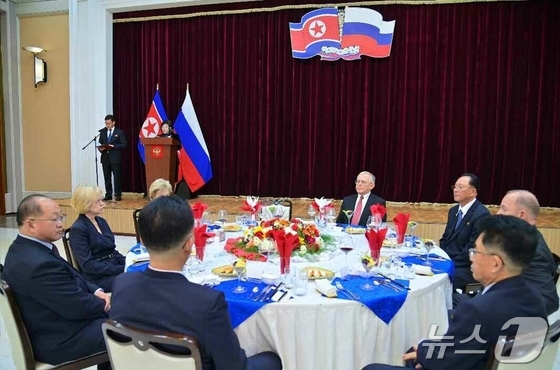
Last year, a record-breaking 10,000 Russians visited North Korea. This surge in tourism and increased delegation exchanges suggests a growing alliance between North Korea and Russia, fostering more people-to-people interactions.
Data from the Russian Federal Security Service (FSB), analyzed by Russian media outlet Verstka and North Korea-focused NK News, reveals that 9,985 Russians traveled to North Korea in 2025. This marks the highest number since public records began in 2010, showing a dramatic increase from 6,469 in 2024 and 1,238 in 2023.
The largest category of visitors was tourists, with 5,075 people. This figure more than doubled the 1,957 Russian tourists in 2024 when North Korea resumed welcoming visitors after the COVID-19 pandemic.
Business travelers, likely including diplomatic envoys and corporate representatives, numbered 1,156. Personal visits slightly decreased to 666, while only 3 were classified as exchange students. The number of transport personnel, including pilots, totaled 3,080.
Most entries were by air, with 6,371 arrivals, followed by 3,453 by rail and 161 by sea. However, visitor numbers in the fourth quarter of 2025 dropped to 2,486 from 3,460 in the previous quarter, indicating a slight deceleration in growth.
This increase in Russian visits to North Korea appears to coincide with the strengthened strategic cooperation between the two nations following the Ukraine conflict.
However, the overall scale remains modest. During the same period, 33,110 Russians visited South Korea, more than triple the number visiting North Korea. The disparity is even more pronounced when compared to major tourist destinations like Turkey (6.62 million), Egypt (over 2 million), and Thailand (1.43 million).
Russia has not disclosed figures for North Korean visitors to its territory. After reporting 295 in the first quarter of 2025, it ceased publishing related statistics. Previously, in the fourth quarter of 2024, approximately 5,500 North Koreans entered Russia, bringing that year’s total to over 13,220.
Some analysts speculate that entries classified as students may actually be North Korean workers filling labor shortages caused by the prolonged conflict. Russia’s reluctance to release data on North Korean entrants is believed to be an attempt to avoid drawing attention to these rising trends. Peter Ward, a researcher at the Sejong Institute, told NK News that tens of thousands of North Korean workers are estimated to have entered Russia in 2025.