

The U.S. government has assessed that the recent Supreme Court ruling invalidating reciprocal tariffs will have a limited impact on global financial markets. However, due to lingering external risks, including the potential for additional tariffs, officials have decided to implement a round-the-clock market monitoring system.
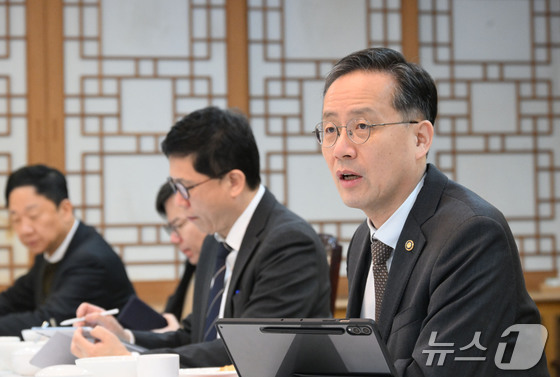
On Monday Morning, South Korea’s Deputy Finance Minister Lee Hyung Il convened a market review meeting with representatives from the Bank of Korea, the Ministry of Trade, Industry and Energy, the Financial Services Commission, and the Financial Supervisory Service.
Attendees noted that global markets remained relatively stable on Friday, the day of the Supreme Court’s decision. The S&P 500 index rose 0.69% from the previous trading day, while the Euro Stoxx 50 index climbed 1.18%. The dollar index dipped 0.2%, suggesting minimal market disruption. Yields on 10-year and 2-year U.S. Treasury bonds increased by only 2 basis points each (1 basis point = 0.01 percentage point).
The U.S. Supreme Court had previously ruled that President Donald Trump overstepped his authority by using the International Emergency Economic Powers Act (IEEPA) to impose reciprocal tariffs. The court determined that the power to levy taxes, including tariffs, rests with Congress and that the IEEPA’s ambiguous provisions do not grant the president unlimited authority to impose tariffs.
However, immediately following the ruling, President Trump announced plans to impose a 10% global tariff under Section 122 of the Trade Act, with the intention of raising it to 15% the next day.
Meeting participants agreed that geopolitical tensions and other external risk factors persist. They resolved to maintain heightened vigilance by continuing the 24-hour market monitoring system to closely track market conditions.
Additionally, they reviewed the ongoing Section 232 tariffs on items such as automobiles and steel, which remain in effect regardless of the Supreme Court ruling. They also noted the initiation of investigations under Section 301 of the Trade Act.
The government plans to closely monitor developments from the U.S. and other nations, actively working to safeguard the benefits secured through the Korea-U.S. tariff agreement and maintain favorable conditions for exports to the United States.