

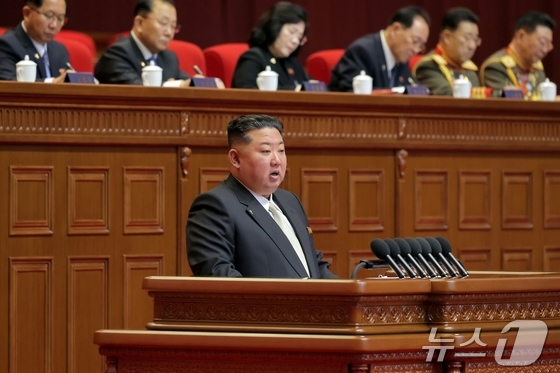
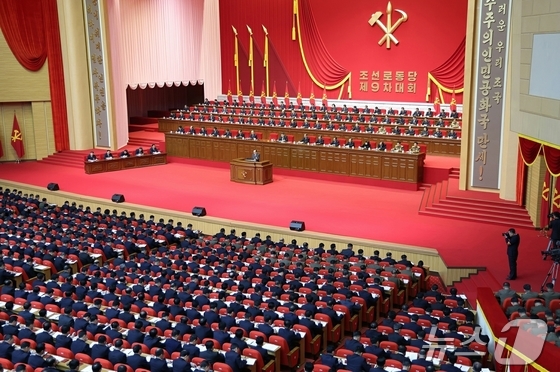
On February 19, the 9th Congress of the Workers’ Party of Korea convened. This quinquennial event serves as North Korea’s most significant political gathering, where major national policies and governance directions for the next five years are discussed and decided, while also confirming personnel changes.
As with the 8th Congress, this assembly saw participation from 5,000 representatives, including 224 members of the party’s central leadership and 4,776 elected from various party organizations.
The delegation comprised 1,902 party and political officials, 747 state, administrative, and economic sector representatives, 474 military delegates, 32 from labor organizations, 321 from science, education, health, sports, culture, and media sectors, and 1,524 field workers and core party members. In his opening address, Kim Jong Un lauded these individuals as key figures with notable achievements in their respective areas and promising future potential.
Compared to the 8th Congress, there was a noticeable increase in the proportion of military representatives and field workers/core party members. Military delegates increased by 16% (66 individuals) from 408 to 474, while field workers and core party members rose by 4.7% (69 individuals) from 1,455 to 1,524. This shift likely reflects the impact of troop deployment to Russia, political consideration for military builders, and the nationally promoted 20×10 local development policy. However, female representation decreased significantly by 21% (88 individuals), from 501 to 413.
The presidium at the 9th Congress’s opening ceremony consisted of 39 members, including Kim, maintaining the same number as the 8th Congress in 2021. However, 23 members (59%) were replaced, a decrease in turnover compared to the previous congress where 29 members (74.4%) were replaced.
The atmosphere at the opening ceremony markedly differed from five years ago. Kim’s speech highlighted groundbreaking achievements across all sectors – politics, economy, defense, culture, and diplomacy – over the past five years, marking a transformative phase in socialist development. He expressed optimism about North Korea’s irreversibly solidified international status, viewing it as a favorable condition for their future. Notably, he emphasized economic progress, stating that the five-year plan for people’s economic development had been fundamentally completed, providing a foundation for systematic economic advancement after a long period of stagnation.
This stance contrasts sharply with his remarks at the 8th Congress, where he acknowledged significant shortfalls in achieving previous economic goals and called for bold internal reforms to prevent repeating painful lessons.
Kim reflected on the change, noting that while he convened the 8th Congress with determination to overcome the worst crisis independently, he now approaches the 9th Congress filled with optimism and confidence about the future.
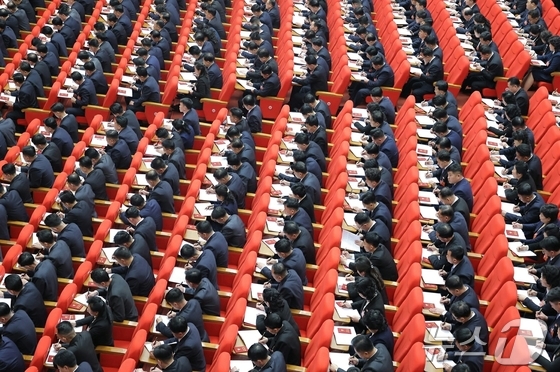
Following the opening ceremony, three main agenda items were discussed over four days: summarizing the Central Committee’s work, amending the party constitution, and electing new central leadership. The specifics of these discussions and amendments were not made public, with expectations that some content would be released through media outlets after the final day’s resolutions.
On February 22, the congress’s final day, Kim was re-elected as General Secretary, with 139 Central Committee members and 111 candidate members elected. Of the 139 central committee members, 66 were reappointed, 19 promoted from candidate status, and 54 newly appointed, resulting in a 52.5% turnover rate.
The 111 candidate members included 23 reappointments, 3 demotions, and 85 new appointees, with a 76.6% new member ratio. Overall, the turnover rate for both full and candidate members reached 51.6%, comparable to previous congresses.
Notably, several senior officials present at the opening ceremony were absent from the new central committee list. These included key figures like Choe Ryung-hae, Pak Jong-chun, and others, mostly in their 70s. Their exclusion signals their retirement from frontline positions, as central committee membership is typically a prerequisite for high-ranking roles in North Korea.
Additional exclusions included heads of various party departments and bureaus, suggesting a broader reshuffling of leadership.
The cabinet saw numerous changes, with several ministers and vice premiers not reappointed, indicating an extensive reorganization at the executive level.
Changes also occurred in provincial and city party leadership, with several key figures being replaced.
The reshuffle appears to be part of a generational transition, with many septuagenarian officials stepping back and being replaced by third-generation leaders in their 60s. This shift aims to balance experience with new perspectives in the party’s leadership.
The 9th Central Committee selections reveal several key trends:
First, while over half of the members are new, the core leadership in the Political Bureau and Secretariat remains largely stable, emphasizing continuity in the regime’s top echelons.
The Political Bureau Standing Committee saw new appointments, all of whom have risen through the ranks under Kim’s leadership. The Secretariat expanded from seven to eleven members, reinforcing key policy areas.
New departments were established to focus on party discipline and local development, with proven officials appointed to lead these initiatives. Some high-profile changes occurred, including the likely appointment of Jo Yong Won to a top legislative position and the reshuffling of economic leadership.
The potential appointment of a First Secretary of the Central Committee, possibly Kim Yo-jong, remains a point of interest, as this position is seen as a potential successor role.
Kim Yo-jong’s promotion to party department head and Political Bureau candidate member underscores her rising influence.
Second, a major reshuffle in the cabinet is anticipated, following the pattern set after the 8th Congress. This is likely to bring in younger, performance-focused officials to key positions.
Third, the departure of key figures in inter-Korean affairs leaves uncertainty about future South Korea policy. Jang Geum Cheol’s potential appointment to lead these efforts could signal a slight shift in approach, given his experience in dialogue and civilian exchanges.
While constitutional amendments were made, it remains unclear if references to unification were removed, potentially indicating a shift towards a two-state policy stance.