

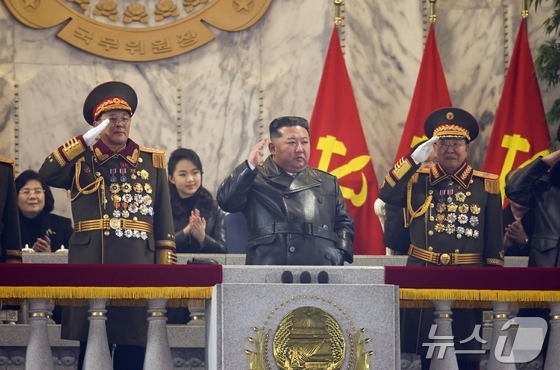
North Korean leader Kim Jong Un has signaled openness to dialogue with the U.S., contingent on recognizing North Korea’s status as a nuclear state. However, he has completely rejected South Korea, labeling it an eternal enemy. Analysts on Thursday suggested this reflects a strengthening of North Korea’s selective diplomacy approach, aiming to drive a wedge between South Korea and the U.S. while bolstering its strategic position.
While maintaining a hardline stance, North Korea’s assessment that there is nothing to gain from inter-Korean relations has been reaffirmed. This raises concerns that the Lee Jae Myung administration’s policy of peaceful coexistence on the Korean Peninsula will face significant challenges in its second year.
High Bar Set for U.S., but Conditions Offered… No Urgency for U.S.–North Korea Talks
The state-run newspaper Rodong Sinmun reported on the conclusion of the 9th Party Congress, detailing Kim’s summary report from January 20-21. This report outlines North Korea’s key policy directions for the next five years.
While criticizing U.S. policies, Kim stated that if the U.S. respects our country’s status as outlined in North Korea’s Constitution and withdraws its hostile policies, there’s no reason it can’t have good relations. This leaves the door open for potential dialogue.
The current status refers to North Korea’s self-designation as a nuclear state in its constitution. The 2022 Nuclear Forces Policy law claims North Korea is a responsible nuclear weapons state, asserting that legal recognition prevents miscalculations among nuclear powers.
Since adopting this law, North Korea has refused denuclearization negotiations, claiming they would violate its laws. It demands international recognition of its nuclear status.
President Donald Trump, unlike his predecessor, avoids referring to North Korea as a nuclear power. However, Pyongyang seeks more advanced recognition and official acknowledgment from the U.S. administration.
This stance conflicts with U.S. interests in nuclear non-proliferation and regional stability. Some analysts suggest North Korea may be presenting unacceptable conditions to blame the U.S. for deteriorating relations and justify closer ties with Russia and China. Kim framed the situation by stating that the future of U.S.-North Korea relations depends entirely on U.S. attitude, implying that any breakdown would be America’s fault.
Some observers believe North Korea desires substantial negotiations with the U.S. government rather than personality-driven summitry. With Trump in office, North Korea may view the previous approach as ineffective.
Consequently, analysts speculate that North Korea seeks formal recognition of its nuclear status through official U.S. documents, rather than relying on personal assurances. This reflects a long-term strategy prioritizing its strategic position over immediate dialogue.
Therefore, it’s widely expected that North Korea would reject any U.S. proposal for talks without preconditions. The urgency for dialogue now lies more with Washington than Pyongyang.
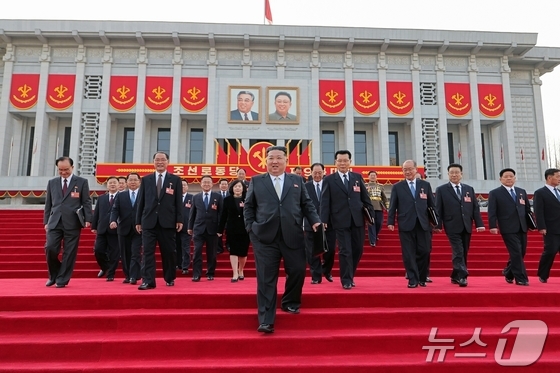
South Korea Labeled an Eternal Enemy as Kim Warns Against Interference
In stark contrast, Kim reaffirmed an uncompromising stance toward South Korea, vowing no conditions whatsoever for reconciliation.
He declared that it will permanently exclude South Korea from the category of its compatriots, emphasizing a firm and conclusive determination to treat South Korea as a thorough adversary and eternal enemy. This hardens the hostile state policy first articulated in late 2023.
Kim dismissed the Lee administration’s North Korea policy as a clumsy deception and poor performance. He warned of clearer and more actionable measures to exclude South Korea from North Korea’s interests.
Kim’s rhetoric has grown increasingly aggressive. He stated that South Korea’s only path to safety is abandoning all ties with them and refraining from provocation, adding that it will permanently sever relations with South Korea and never revive the distorted past.
Notably, Kim issued a stark threat: If South Korea’s reckless actions at a nuclear state’s doorstep harm our security, it will take any necessary action. The possibility of South Korea’s complete collapse cannot be ruled out. This echoes past rhetoric from Seoul regarding regime change in Pyongyang.
Experts predict North Korea, emboldened by its nuclear status and close ties with Russia, will maintain a policy treating the U.S. and South Korea differently. This aims to create friction in the U.S.-South Korea alliance.
Professor Lim Eul-chul from Kyungnam University’s Institute for Far Eastern Studies stated that Kim’s report marks a turning point in North Korea’s South Korea strategy, representing an unprecedentedly aggressive stance. Pyongyang sees no value in Seoul’s conciliatory approach, which demands denuclearization under strict conditions.
Lim added that by defining South Korea as a foreign enemy, North Korea reduces the moral barrier to potential nuclear use against fellow Koreans, implying a threat of military force, including preemptive strikes.