

President Donald Trump’s visit to China is just around the corner, set to begin in three weeks. The President is scheduled to stay in Beijing from March 31 to April 2, where he will meet with Chinese President Xi Jinping. Their discussions are expected to cover a range of pressing issues, from tariffs to the Taiwan situation. This marks the first visit by a U.S. president to China since 2017, drawing significant international attention.
The South Korean government has been closely monitoring Trump’s upcoming trip to China. There’s speculation that Trump, who has consistently expressed a desire for dialogue with North Korea, might extend an invitation to Kim Jong Un for another meeting. Such a move could potentially accelerate discussions between the two leaders.
In fact, after a planned meeting with Kim fell through during last October’s Asia-Pacific Economic Cooperation (APEC) summit in Gyeongju, Trump stated his intention to visit China in April of the following year. He added that he would return with respect for the North Korean leader.
President Lee Jae Myung has previously described the U.S. as a peace maker and South Korea as a pace maker, envisioning a role for South Korea as a mediator in North Korea-U.S. talks to help restore inter-Korean dialogue. Given the current deterioration in inter-Korean relations, many have pinned their hopes on Trump’s trip as a potential catalyst for change on the Korean Peninsula. Minister Chung Dong-young even described this April as a critical period or a once-in-a-lifetime opportunity.
U.S. Attacks on Iran Diminish Prospects for U.S.-North Korea Dialogue; North Korea Maintains Distance from South Korea
However, recent events have cast a shadow over these expectations. During the 9th Congress of the Workers’ Party of Korea last month, Kim once again drew a hard line regarding inter-Korean relations. He declared that South Korea is no longer kin and emphasized the adversarial stance between the two countries, even going so far as to mention the possibility of South Korea’s complete collapse as a threat.
Moreover, the recent U.S.-Israel attacks on Iran are likely to have a negative impact on peace efforts on the Korean Peninsula. As Trump seeks regime change in Venezuela, a North Korean ally, and engages in full-scale conflict with Iran, Kim now views Trump as an increasingly untrustworthy counterpart.
Given Kim’s previous failed negotiations with the U.S. during Trump’s first term, many believe he sees no reason to return to the negotiating table amid heightened risks.
On the other hand, questions arise about whether the U.S. has the capacity to engage in dialogue with North Korea at this time. Externally, it must manage the prolonged war in Ukraine and escalating tensions with Iran. Internally, political pressures are mounting ahead of the crucial midterm elections in November.
Experts predict that Trump will focus on finding an exit from the confrontational stance with China during his meeting with Xi. They argue that the current geopolitical burdens make it difficult for him to effectively engage in North Korea-U.S. dialogue.
Momentum for Peace on the Korean Peninsula Appears Challenging in Short Term, But Hopes Remain for Long-Term Changes
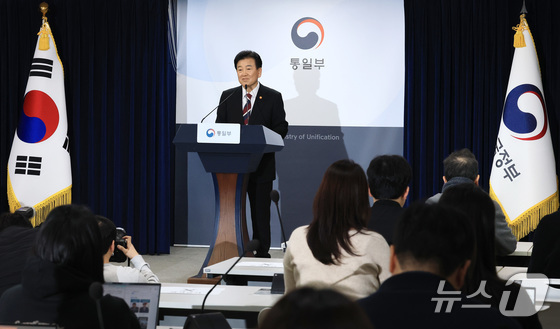
As these setbacks accumulate, the atmosphere at the Ministry of Unification, which oversees inter-Korean relations, appears somewhat stagnant. Just last month, Minister Chung expressed regret over the Yoon Suk Yeol administration’s drone operations against North Korea and the infiltration of civilian drones. This briefly sparked a dialogue when Kim Yo-jong, the Deputy Director of the Workers’ Party, responded.
Minister Chung had previously stated his intention to visit China as a special envoy for peace on the Korean Peninsula ahead of the U.S.-China summit in April. He planned to urge China to play a constructive role in facilitating inter-Korean dialogue. However, this plan has reportedly been derailed due to unexpected developments in the Middle East and China’s political event known as the Two Sessions in March.
In conclusion, it seems unlikely that Trump’s visit to China will bring about significant changes in the situation on the Korean Peninsula. The South Korean government acknowledges this reality, shifting its focus from hopes for immediate North Korea-U.S. dialogue to fostering a long-term role for South Korea in regional diplomacy.
A government official stated that as the saying goes, Nothing happens if you do nothing. It recognizes the need to focus on what we can do, even amid the worst inter-Korean relations.
It may also be worth reflecting on Kim’s remarks directed at South Korea during the recent Workers’ Party Congress. He stated that there is nothing left in the relationship with South Korea; if there is, it’s only a cold calculation and thorough response aligned with the national interests.
While these comments may seem like a harsh dismissal of South Korea, they also convey a sense of resentment and emptiness. If circumstances arise that allow for a change in North Korea’s calculations and responses, it suggests that Pyongyang could potentially alter its stance toward Seoul.