

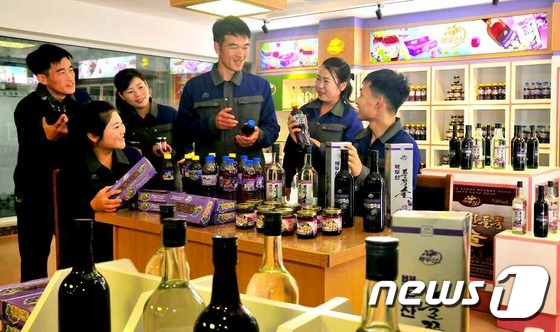
The possibility of North Korean liquor, which has been held at Incheon Customs for six months, being officially imported has significantly increased. This development comes after the private company seeking to import the liquor recently submitted the final essential documents requested by the government.
Jeong Ik-hyun, chairman of the Our Farming Cooperative Association, which imported 1,200 bottles of soybean paste liquor and 2,300 bottles of wild berry liquor last September, confirmed to News1 on Thursday that he had submitted the additional documents requested by the Ministry of Unification through the Inter-Korean Exchange and Cooperation System.
The Inter-Korean Exchange and Cooperation System is an online platform operated by the Ministry of Unification. It serves as an electronic administrative system for reporting and approving the import and export of goods, as well as cooperation projects between North and South Korea. The Inter-Korean Exchange and Cooperation Support Association manages the system’s day-to-day operations, while the Ministry of Unification retains final approval authority.
Jeong reported that for this barter-based project, he registered several documents in the system. These included confirmation from North Korea that they received the 103 tons (about 227,076 lbs) of sugar he provided, shipping invoices, Chinese customs documents, and sugar purchase records.
The Chinese customs documents serve as proof that North Korea’s business partner received the sugar through China, essentially functioning as a customs import/export declaration.
These documents typically detail the item name, quantity, price, exporting and importing companies, origin, destination, and declaration date. However, the government initially deemed Jeong’s submitted documents unreliable because they lacked identification numbers and dates that could trace the movement of the goods.
Earlier in January, the government announced a legislative notice for a partial amendment to the Enforcement Decree of the Act on Inter-Korean Exchange and Cooperation. Article 25 of the amendment added a provision requiring the submission of transshipment certification documents for imports transiting through a third country. This mandates that official transportation and customs certification documents involving customs authorities must be submitted, rather than descriptions prepared by private companies.
Addressing this issue, Jeong explained that to export from China to North Korea, you must apply for export at customs. Once approved, a customs number is issued. However, he hastily submitted only the documents received at customs before the number was assigned, which led to problems. He’s since supplemented the documents and resubmitted them.
The initial documents Jeong submitted included a Bill of Lading (BL) number issued by the shipping company, which is generated based on the shipment date. Jeong believed this would allow for cargo tracking, but he later realized that the government required a customs clearance number issued by Chinese customs.
He stated that the authenticity of the customs documents he’s resubmitted can be quickly verified by searching the number. If they turn out to be fake, it would mean committing fraud against the state, and he would face severe penalties.
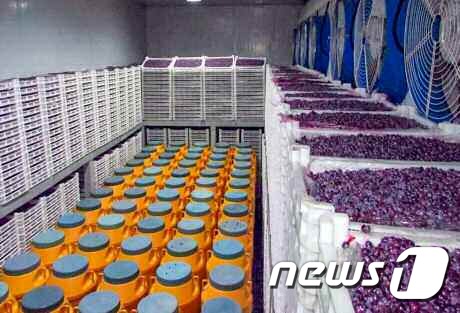
Last September, Jeong facilitated the import of 3,500 bottles of North Korean liquor through contracts with the North Korean Chosun Sangmyeong Trading Corporation and Chinese companies, obtaining approval from the Ministry of Unification. However, gathering the necessary documents for final import approval, such as a certificate of origin, has been a lengthy process.
In the past, it was possible to officially confirm the North Korean origin of goods through certificates issued by North Korea’s National Economic Cooperation Federation. However, due to the prolonged freeze in inter-Korean relations, this channel has become non-operational. North Korea has redefined inter-Korean relations as involving two separate states and has completely cut off communication, halting the activities of inter-Korean exchange organizations.
As a result, domestic private businesses have resorted to securing North Korean goods through third-party transactions via Chinese intermediaries. They now rely on indirect proof such as confirmation letters or customs data prepared by third parties. However, this method inevitably raises concerns about the credibility and authenticity of the documents, making it a contentious issue in the government’s approval process. The Ministry of Unification considers the origin of goods and the transparency of transaction routes as key criteria in its import approval assessments.
The government is also working to improve regulations in response to the long-term severance of inter-Korean relations. Recognizing the current challenges in obtaining official documents issued by North Korean institutions, the government has revised guidelines to include third-party documentation for review if certain criteria are met. However, the final approval will depend on the reliability of the submitted materials, and the government will carefully examine this aspect before deciding on the final import status.