

North Korea has reportedly shifted some functions of the existing Ministry of Shipbuilding to the Second Economic Committee, which oversees military economics, during the first session of the 15th Supreme People’s Assembly. Some analysts suggest that the Second Economic Committee may have been incorporated into the Cabinet.
Second Economic Committee, in Charge of Military Affairs, Merged into Cabinet?… Signs of Expanded Authority for Cabinet-Affiliated Bodies
On March 22, North Korea confirmed that it had changed the title of the existing Minister of Shipbuilding to Minister of Shipbuilding for the Second Economic Committee during the personnel reshuffle at the first meeting of the 15th Supreme People’s Assembly.
North Korea, which prioritizes strengthening its military capabilities, has long operated the military-focused Second Economy separately from the civilian economy managed by the Cabinet. The Second Economic Committee is believed to oversee all of North Korea’s weapon systems, from conventional arms to nuclear weapons, as well as other military-related planning, production, sales, and distribution.
According to the North Korea Information Portal of South Korea’s Ministry of Unification, the Second Economic Committee was originally part of the Central People’s Committee during Kim Il Sung’s rule. However, in 1993, when power transferred from Kim Il Sung to Kim Jong Il , it was moved under the National Defense Commission. During Kim Jong Il ‘s Military First era, the committee operated as an independent organization, spearheading efforts to bolster North Korea’s defense capabilities.
However, most activities of the Second Economic Committee remain shrouded in secrecy, making it difficult to clearly identify its organizational structure. North Korea has configured many factories across the country for dual civilian and military use, while some sensitive military facilities are disguised as civilian plants, complicating accurate assessments of the Second Economy’s scale.
If the Second Economic Committee has indeed been reintegrated into the Cabinet, it would mean the Cabinet now assumes full responsibility for the production of North Korea’s strategic weapons, including nuclear and missile systems, significantly expanding its authority. In fact, North Korea established the position of First Vice Premier within the Cabinet during this Supreme People’s Assembly session and increased the number of Cabinet vice premiers from seven to eight.
Strong Possibility Only Certain Military Supply Functions Moved to Second Economic Committee
However, given that the existing structure includes the Chairperson of the National Planning Committee and the Chairperson of the Agricultural Committee serving as vice premiers, it appears that not all functions of the Second Economic Committee have been incorporated into the Cabinet.
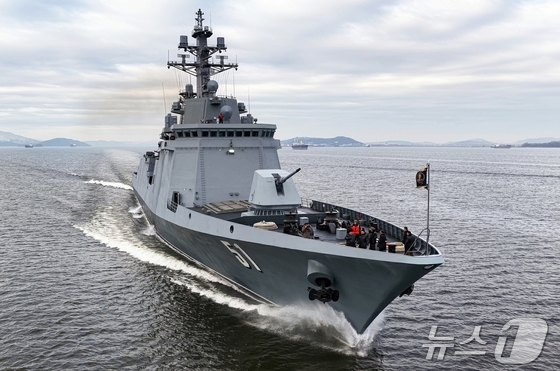
Experts believe that the Ministry of Shipbuilding, which has gained importance in warship construction since last year, may have been reorganized to split its functions between the Cabinet and the Second Economic Committee. They speculate that while the Cabinet handles budget planning and procurement, the Second Economic Committee will oversee actual shipbuilding operations.
Lee Sang-geun, a senior researcher at the National Security Strategy Institute, analyzed that if the entire Second Economic Committee were incorporated into the Cabinet, it would mean that the Rodong Sinmun only disclosed personnel changes for the Ministry of Shipbuilding while keeping other appointments confidential. This approach to managing organizational information seems unlikely. It appears that the Ministry of Shipbuilding, originally part of the Cabinet, now straddles both the Cabinet and the Second Economic Committee.
Hong Min, a senior researcher at the Korea Institute for National Unification, suggested that North Korea likely strengthened the accountability of the Second Economic Committee during the construction of destroyers and nuclear-powered submarines last year. He interpreted this as evidence that North Korea aims to formalize the Ministry of Shipbuilding as an institutional body within the Second Economy, promoting naval power enhancement as a national project.
Kim Jong Un, the General Secretary of the Workers’ Party of Korea, directed the construction of two new 5,000-ton class destroyers last year and instructed that two such destroyers be built annually over the next five years during the 9th Party Congress. It is also expected that North Korea will accelerate the construction of its nuclear-powered submarine, which was publicly unveiled for the first time last year.