

President Donald Trump’s simultaneous pursuit of negotiations with Iran and plans for troop deployment is causing increased confusion in the international community. Analysis on Wednesday suggests that the government is facing a double burden of aligning diplomatically with the U.S. while maintaining communication with Iran behind the scenes.
According to major foreign news reports on Tuesday, the U.S. Department of Defense plans to deploy about 1,000 troops from the Army’s 82nd Airborne Division to the Middle East within days to support military operations against Iran. The 82nd Airborne, an infantry special forces unit specialized in parachute assault infiltration, may be deployed for operations such as seizing Kharg Island, Iran’s oil export hub in the Persian Gulf.
In addition, the Trump administration is reportedly moving 2,200 members of the 31st Marine Expeditionary Unit from Okinawa, Japan, and 2,200 members of the 11th Marine Expeditionary Unit from California to the Middle East. It is estimated that about 50,000 U.S. troops are currently deployed in the Middle East region.
This news comes shortly after the U.S. entered into a full-fledged ceasefire negotiation atmosphere with Iran, drawing attention.
On March 21, President Trump issued a 48-hour ultimatum to Iran, threatening to destroy power plants if the Strait of Hormuz was not opened. However, on Monday, he suddenly announced that he had productive talks with Iran to resolve the war and postponed the previously announced attack on Iranian power plants for 5 days.
In response, Iran denied official negotiations but stated that they received and responded to the U.S. message, essentially acknowledging that indirect communication had taken place.
In this context, it was reported that the U.S. and Iran are exploring their first face-to-face negotiations this week to discuss the issue of ending the war.
According to Israeli media reports, the Trump administration has reportedly conveyed a proposal to Iran through Pakistan, suggesting a month-long ceasefire and discussions on 15 demands. However, experts generally agree that Iran is unlikely to accept U.S. demands that include complete renunciation of nuclear rights and limitations on missile capabilities in the negotiations.
Analysts suggest that the Trump administration is exerting diplomatic pressure by simultaneously increasing ground troops in the Middle East. The decision to mobilize U.S. ground forces is expected to depend on whether this negotiation reaches a dramatic resolution or breaks down.
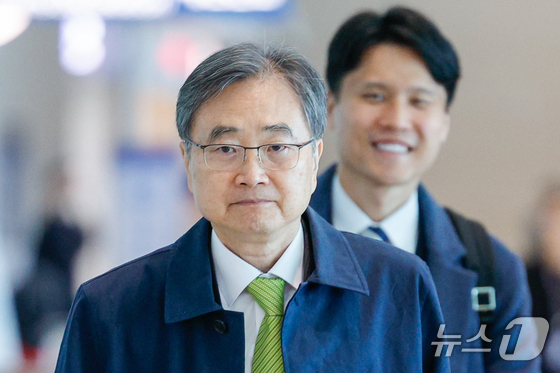
Aligning with U.S. Stance While Communicating with Iran… Prolonged Strategic Ambiguity Challenges
Amid this escalating situation, the South Korean government is focusing on maintaining diplomatic balance by fundamentally maintaining cooperation with the U.S. while continuing high-level communication with Iran.
The government has aligned itself with Western countries by joining the joint statement condemning the blockade of the Strait of Hormuz, which included the UK, France, Germany, Italy, the Netherlands, Japan, and Canada. At the same time, regarding President Trump’s request to send warships to the Strait of Hormuz, the government maintains that there has been no official request yet, while emphasizing that close communication with the U.S. continues. This strategy is interpreted as avoiding immediate answers on sensitive issues while highlighting that there are no problems in the U.S.-Korea relationship.
Separately, Foreign Minister Cho Hyun had a phone conversation with Iranian Foreign Minister Abbas Araghchi on Monday, requesting the safety of Korean ships and crew isolated in the Strait of Hormuz. This conversation was the first between the foreign ministers of the two countries since the war between the U.S., Israel, and Iran began.
Minister Cho is scheduled to meet U.S. Secretary of State Marco Rubio on Thursday in Paris, France, where the G7 Foreign Ministers’ expanded meeting will be held. The two ministers are expected to discuss issues such as the deployment of Korean troops to the Strait of Hormuz and the negotiation trends between the U.S. and Iran.
Particularly, as diplomatic confusion intensifies with President Trump’s constantly changing attitude, attention is focused on whether Minister Cho can receive specific situational assessments and plans from the Trump administration through Secretary Rubio.
Professor Park Won-gon of Ewha Womans University advised that in this confusing situation where the interests of the U.S., Iran, and Israel differ and the war situation changes moment by moment, it is best for the government to maintain strategic ambiguity and continue communication with the U.S. and Iran behind the scenes.