


A recent study has revealed that over half of inactive nurses who returned to healthcare institutions after leaving the field have once again departed, citing overwhelming workloads as a primary reason.
With nearly 40% (204,000 as of 2024) of licensed nurses (527,000) currently inactive, experts are calling for urgent measures to bring these professionals back into the workforce.
Even Industry-Best Treatment Falls Short: Top-Tier Hospitals Lead in Resignation Rates
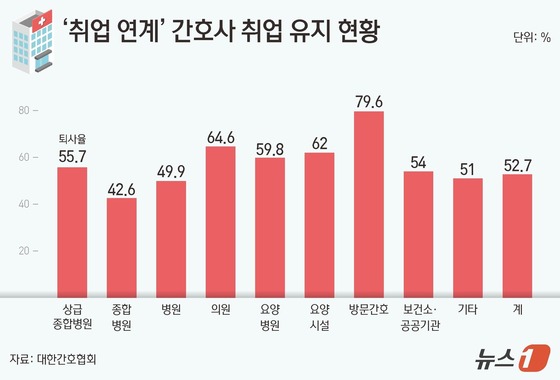
According to the Korean Nurses Association, a survey of 1,102 nurses out of 7,511 who found employment through the Nursing Workforce Support Center between 2015 and 2025 showed that 52.7% resigned after being rehired.
Breaking down the data by hospital type, top-tier hospitals, despite offering the best treatment in the industry, had the highest resignation rate at 55.7%, surpassing both general hospitals (42.6%) and smaller hospitals (49.9%).
The main reasons for leaving were work environment (29.6%) and compensation level (21.8%).
A representative from the Nursing Workforce Support Center explained that the high-stress environment and intense workload associated with critically ill patients led many to resign. They added that in top-tier hospitals, many nurses left when requests for department transfers or work schedule adjustments were denied.
The representative emphasized the need to reduce nurse-to-patient ratios and implement flexible work arrangements to retain skilled nursing staff.
However, South Korea currently lacks legal standards for nurse-to-patient ratios.
The Nurses Association estimates current ratios at 9-10 patients per nurse in top-tier hospitals, 19-20 in general hospitals, and over 30 in smaller hospitals. In contrast, major Organisation for Economic Co-operation and Development (OECD) countries like the U.S. and Australia cap patient loads at 4-7 per nurse.
While the 2024 Nursing Act provides a policy foundation, specific standards are still under discussion in the National Assembly.
Community Nursing Crisis: 80% Resignation Rate Calls for Improved Compensation
The exodus of nursing staff from community care settings, including nursing homes, care facilities, and home health services, is even more severe.
Home health nursing, in particular, faces a staggering 79.6% resignation rate, with 8 out of 10 nurses leaving their positions. Care facilities (62%) and nursing homes (59.8%) also struggle with high turnover.
For home health nurses, compensation level (21%) and childbirth, childcare, and family responsibilities (21%) were the primary reasons for leaving.
A center representative noted that despite expectations of flexibility, low pay relative to travel time and scheduling difficulties have driven many to quit. They called for realistic compensation, including hazard pay for high-risk area visits.
In care facilities, workplace relationships (23%) topped the list of resignation reasons, significantly higher than in top-tier hospitals (7.3%).
The representative explained that nurses in small facilities often bear the brunt of conflicts among staff, patients, and families. They suggested implementing conflict resolution teams and psychological support programs to address these issues.
Emphasizing the critical role of community care nurses, the representative stressed the urgent need for retention policies.
Outpatient clinics also saw high resignation rates at 64.6%.
A Nurses Association spokesperson noted that in general clinics, nurses (who make up only 16% of nursing staff) are concentrated in specialized areas like dialysis units and surgical clinics. Many leave due to demanding work that outweighs compensation.
Current medical law requires outpatient facilities with five or more inpatients to maintain a 50% nurse-to-nursing assistant ratio. However, most clinics lack inpatient beds, making this standard inapplicable.
The center representative highlighted severe turnover in small and mid-sized hospitals due to wage inversions between nurses and nursing assistants. They called for government intervention to improve wage structures, including experience-based pay guidelines.