

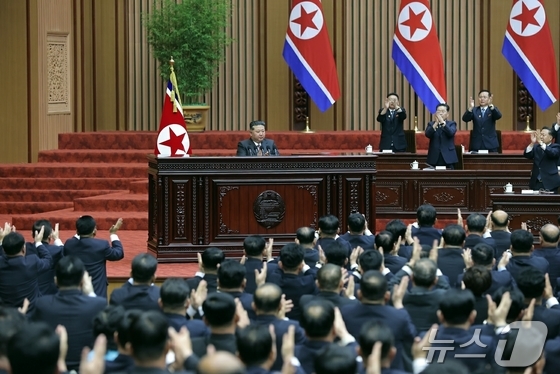
On April 5, analysts assessed North Korea’s recent overhaul of its judicial and law enforcement systems, noting that the reforms, including the abolition of the preliminary examination system and the creation of a new police force, represent a dual push for institutional improvement and tighter control.
Kim Jong Un’s direct call for legal and security system reforms during his policy speech at the Supreme People’s Assembly was swiftly followed by these significant changes.
A recent report from the Korea Institute for National Unification stated that eliminating the preliminary examination system has streamlined criminal proceedings into three stages: investigation, indictment, and trial. The report also noted that shorter detention and indictment periods align with international human rights standards.
Since 2021, North Korea’s criminal procedure law has undergone two revisions in 2022 and 2023, aimed at simplifying processes and enhancing rights protections. The most significant change is the abolition of the preliminary examination system, which had been in place for over 70 years, and its integration with the investigation phase. This has reduced the criminal procedure from four stages to three.
Detention periods have been cut from two months to one, and indictment periods for labor reform and death penalty cases have been slashed from a maximum of 20 days to just five. Questioning of defendants is now generally limited to 8:00 p.m., and the notification period for selecting a lawyer has been reduced from three days to 24 hours, bolstering defense rights. The report highlighted new provisions stating that lawyers conduct their activities independently and that judicial authorities must actively ensure this.
However, it remains uncertain whether these changes will lead to immediate human rights improvements. The report cautioned that the increased investigative authority resulting from the abolition of the preliminary examination system could have negative consequences, potentially leading to human rights violations such as coerced confessions due to the concentration of power in investigators’ hands.
Notably, the restructuring of the judicial system is occurring alongside reforms in law enforcement and intelligence agencies. North Korea is believed to have renamed the Ministry of State Security to the State Intelligence Agency, and Kim officially announced plans to establish a new police system. The report suggests this aims to delineate roles among legal institutions while strengthening their connections, and raises the possibility of further legal revisions and organizational restructuring.
While the establishment of a new police system is described as an effort to specialize and refine law enforcement functions, there are concerns it may involve transferring some existing social safety responsibilities. Some observers speculate that non-law enforcement functions may be reduced or redistributed to other agencies.
From a human rights perspective, fears of increased control are more pronounced. The report warned that renaming the agency to State Intelligence Agency could exacerbate privacy rights infringements through enhanced information gathering. It also noted that the police system’s stated purpose of ensuring internal state security and social stability suggests a focus on regime preservation rather than citizen protection.
The legal representation system also faces criticism. While the report acknowledged new provisions guaranteeing lawyers’ independent activities, it also highlighted the addition of a clause stating that cases are handled according to state demands, raising questions about how these potentially conflicting regulations will operate in practice.
In conclusion, these systemic changes appear to formally align with international standards while simultaneously reinforcing the regime’s stability and control mechanisms within the party’s power structure. The report emphasized the need for an approach that considers both normative aspects and on-the-ground realities, stressing that further assessment is crucial to determine whether these changes actually improve the human rights situation for North Korean citizens.