

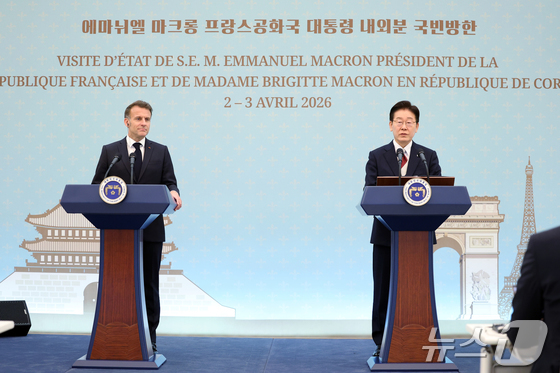
South Korea and Europe have joined forces to spearhead disruptive innovation in biohealth and deep tech sectors. This collaboration was initiated during French President Emmanuel Macron’s state visit to South Korea.
On April 3, the Korea Health Industry Development Institute’s K-Health Future Promotion Team announced the signing of a strategic Memorandum of Understanding (MOU) with the European Joint European Disruptive Initiative (JEDI).
The Korean version of the ARPA-H project, launched in 2024, is driving cutting-edge research and development initiatives to tackle critical healthcare challenges, including quantum-based drug discovery.
The team overseeing this project employs a dynamic approach centered on Project Managers (PMs), fostering a culture of high-risk, high-reward research to generate groundbreaking results.
JEDI, Europe’s answer to ARPA, is dedicated to nurturing technological innovation to secure the continent’s future competitiveness and technological sovereignty.
Established following President Macron’s proposal for a European ARPA, JEDI has been operational since 2023.
The initiative spearheads programs aimed at pushing the boundaries of science and innovation across energy, life sciences, computing, and space sectors. It leverages an extensive ecosystem of 7,500 researchers spread across 43 hubs in 30 countries.
This partnership aims to catalyze disruptive innovation in biohealth and deep tech by embracing JEDI’s philosophy of supporting high-risk, high-reward research while accepting the possibility of failure.
Both organizations have incorporated specific action plans into the agreement to ensure close collaboration from the early stages of strategic technology forecasting. This approach goes beyond mere technology exchange, aiming to produce tangible outcomes.
Concurrently, the promotion team is expanding its global cooperation network, forging partnerships with the U.S., Germany, Japan, and others. This MOU with JEDI is expected to significantly bolster future European partnerships, marking a new era in international scientific collaboration.