

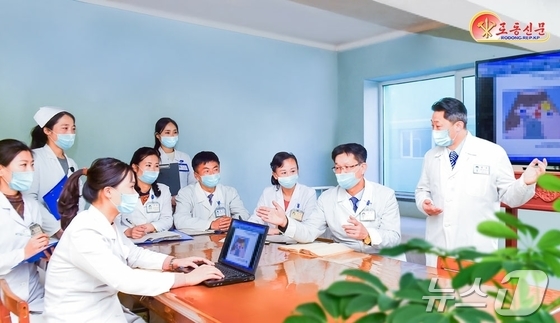
North Korea is accelerating reforms in its healthcare system by officially expanding medical coverage through a health insurance fund. This move aims to overhaul the existing system, which relied entirely on state funding, to strengthen its financial base. Analysts predict that changes to the current system, rooted in free medical care, are inevitable as of Friday.
The Korea Institute for National Unification recently released a report titled, Reform of North Korea’s Healthcare System: Background and Implications of the Health Insurance Fund Implementation. The report highlights that Kim Jong Un, General Secretary of the Workers’ Party, emphasized the need to innovate the healthcare system and expand coverage through the health insurance fund during his address to the Supreme People’s Assembly. According to the analysis, the core of this reform lies in strengthening the material and technical foundations of the healthcare sector, particularly its financial structure, through amendments to healthcare laws and expansion of the medical coverage system.
The institute emphasized that this reform clearly represents a shift in financial structure. The report explains that the health insurance fund system aims to dismantle the previous model of full state funding and diversify funding sources. It comprises mandatory contributions from enterprises and individuals to the insurance fund, along with voluntary payments. This marks a formal transition from a structure solely dependent on state budgets to one where residents and businesses directly share some medical costs.
However, researchers believe the likelihood of completely abolishing free medical care is limited. They note that free treatment is a cornerstone of the system, enshrined in multiple laws, including the constitution and healthcare law. Removing these provisions entirely could raise legitimacy issues for the regime and its institutions. Instead, they suggest a dual structure is more likely, maintaining free treatment while incorporating a healthcare coverage system based on the health insurance fund.
Specifically, there are discussions about maintaining free treatment for primary healthcare while shifting high-cost medical services, such as surgeries and advanced diagnostics, to an insurance-based model.
This transformation aligns with the financial burdens associated with expanding large-scale healthcare infrastructure. North Korea is pursuing a healthcare modernization plan that includes constructing 100 hospitals across cities and counties over the next five years, expanding general hospitals, and building additional hospitals in Pyongyang, as outlined in the 9th Congress of the Workers’ Party and the first session of the 15th Supreme People’s Assembly.
The report states that considering the construction and operation of hospitals, deployment of medical personnel, and procurement of equipment and medicines, substantial financial resources will be necessary. It adds that expanding the insurance fund is essential to ensure stable funding.
In fact, North Korea’s healthcare budget is trending upward. The report indicates that healthcare expenditures in 2026 increased by 5.6% compared to the previous year, noting that annual budget increases are unavoidable to continue the healthcare modernization plan.
Improvements in medical services through the expansion of the health insurance fund are also anticipated. The report assesses that strengthened financial resources could lead to better supply of pharmaceuticals and medical equipment, enhancing the quality of medical services. It also suggests that existing irregular medical practices, such as patient bribery or informal pharmaceutical purchases, may decrease.
However, the Korea Institute for National Unification also points out potential drawbacks. The report warns that if the burden of insurance premiums shifts to residents and businesses, healthcare access for low-income groups may worsen, potentially deepening healthcare inequality and eroding health rights.