

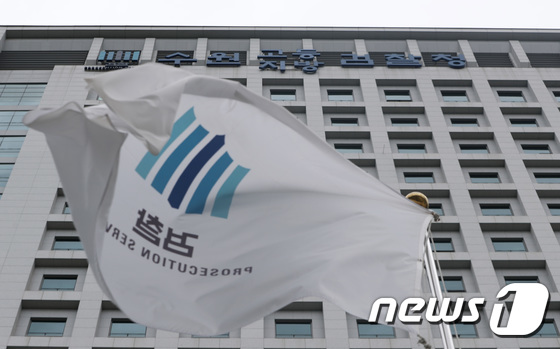
Two former and current executives of the Korean Confederation of Trade Unions (KCTU) are facing severe penalties as prosecutors seek prison sentences of seven and eight years for their alleged involvement with North Korean operatives in China.
On Thursday, the 12th Criminal Division of the Suwon District Court, led by Judge Park Geon-chang, concluded hearings for A, the deputy secretary-general of KCTU’s Gyeonggi Central Branch, and B, the former head of the Women’s Department of the National Democratic Union of Trade Unions. Both were charged with violating the National Security Law while out on bail.
During the trial, prosecutors requested a seven-year prison sentence and a seven-year ban from public office for A, and an eight-year sentence with an eight-year ban for B.
The prosecution argued that the defendants conspired with a former KCTU organization director, Seok, to travel abroad, meet North Korean agents, and return to South Korea with orders from Pyongyang. They emphasized the gravity of the situation, stating that this crime poses a serious threat to national security.
Defense lawyers countered that under the National Security Law, acts of praising or conspiring with North Korea only apply when South Korean citizens travel to North Korea with specific intent and then return. They argued that the evidence does not support claims of the defendants engaging in such activities.
The defense acknowledged that the defendants met North Korean contacts through Seok but insisted it was coincidental, with no evidence of ongoing communication or execution of North Korean directives. They portrayed the defendants as dedicated labor rights advocates and pleaded for a not guilty verdict.
A presented a prepared closing statement, highlighting his 30 years of service with the KCTU. He described the organization as a coalition that makes decisions through consensus, emphasizing that unilateral actions are impossible. A expressed disbelief at the accusations, stating that he occasionally met with Seok, but had no idea about his activities.
B, the former Women’s Department head, expressed distress, saying that it no longer active in union activities. The sudden search and seizure was shocking. A past trip to China for a brief break has turned into a nightmare. She appealed for a fair judgment.
Both defendants were indicted without detention for allegedly traveling to Guangzhou, China, in September 2018, meeting North Korean operatives, receiving instructions, and returning to South Korea.
The prosecution, after taking over the case from the National Intelligence Service, claims to have confirmed through further investigations that the defendants acted on North Korean directives.
In a related case from May 2023, Seok, the former head of KCTU’s organization department, initially received a 15-year prison sentence and a 15-year ban from public office. On appeal, his sentence was reduced to nine years and six months. The Supreme Court’s dismissal of both sides’ appeals finalized this decision.
The court is set to announce its verdict for A and B on May 21 at 2:00 p.m. (South Korean time).
This case highlights ongoing tensions between South Korea’s labor movements and national security concerns, raising questions about the balance between workers’ rights and state surveillance.
The outcome of this trial could have significant implications for labor unions and their international activities in South Korea.