

The U.S. has initiated an investigation into overproduction and forced labor under Section 301 of the Trade Act. In response, the South Korean government has officially submitted a position paper, asserting that sanctions or aggressive measures against South Korea would be unjustified.
The South Korean government emphasized that its manufacturing sector operates on market principles and that measures to prevent forced labor have been significantly strengthened. They argued that any punitive actions resulting from the investigation would be inappropriate.
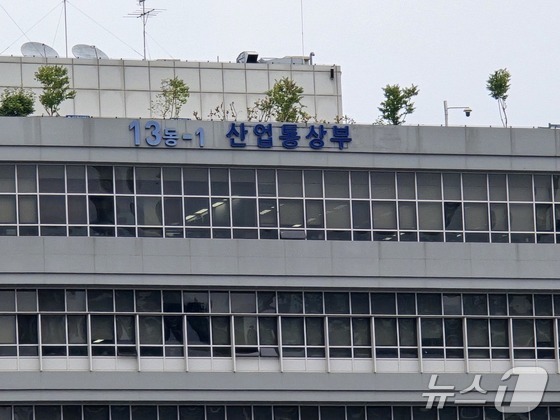
The Ministry of Trade, Industry and Energy announced on Thursday that the government has completed its submission of a position paper to the Office of the U.S. Trade Representative (USTR).
In mid-March, the USTR launched a Section 301 investigation into overproduction and forced labor, inviting stakeholder comments.
Section 301 empowers the USTR to recommend a range of responses, including tariff increases, concession withdrawals, or import restrictions, if foreign practices are deemed unfair, unreasonable, or discriminatory.
While Section 301 investigations typically take over six months, some analysts predict this one may move quickly to address the tariff gap left by a recent ruling that declared tariffs imposed under the International Emergency Economic Powers Act (IEEPA) by the Trump administration illegal.
South Korea’s Overproduction? A Case of Proactive Restructuring
In its position paper on the overproduction investigation, the South Korean government stressed that any U.S. actions resulting from this inquiry would be neither appropriate nor necessary, given South Korea’s market-based business structure, the nature of its major manufacturing industries, the complementary relationship between South Korea and the U.S., and South Korean investments in America.
The government pointed out that South Korea’s manufacturing sector operates within a market economy, with production levels fluctuating in response to economic cycles. This situation, they explained, is far removed from the USTR’s concerns about government intervention or structural overproduction.
The Ministry asserted that the manufacturing sector is driven by private enterprises operating in the market, with South Korean export prices consistently aligning with global market prices. This, they argued, confirms that South Korea does not artificially suppress export prices through non-market means.
They further clarified that factory utilization rates are determined by verified order volumes and commercial demand, not by government directives to maintain production regardless of market conditions.
The government emphasized that, contrary to the USTR’s concerns about structural overproduction based on non-market support, South Korea has actually been a victim of global overproduction and has been actively restructuring its industries.
The Ministry explained that South Korea has implemented various systems to address overproduction issues and promote proactive industry restructuring. For instance, the petrochemical industry is currently undergoing restructuring supported by special legislation to transition to eco-friendly production, in response to the recent global oversupply situation.
The position paper also highlighted South Korea’s contributions to U.S. supply chains, the synergies created by these contributions, job creation in the U.S. through South Korean investments, cooperation in the shipbuilding industry, and the natural increase in trade surplus due to expanded bilateral trade.
Strengthening Penalties for Forced Labor and Human Trafficking; Managing Supply Chains with ESG Guidelines
Alongside the Section 301 investigation into overproduction, the U.S. is examining practices aimed at eradicating forced labor. There are allegations that some entities are disrupting the market by reducing labor costs through forced labor or human trafficking.
In response, the Ministry of Trade, Industry and Energy cited improvements in domestic laws and systems.
The position paper outlined how South Korea has bolstered its penal and protective framework against forced labor through Criminal Code provisions on human trafficking, prohibitions on forced labor in the Labor Standards Act and Seafarers Act, and the establishment of laws to prevent human trafficking and protect victims. It also noted South Korea’s ratification of the International Labour Organization’s Convention on the Elimination of Forced Labour.
The Ministry also introduced private-sector supply chain management policies aimed at eradicating trade in products made through forced labor.
The Ministry emphasized that the government considers corporate social responsibility and supply chain due diligence as key priorities, stating that they have actively implemented policies to encourage companies to exclude products made through forced labor from their supply chains.
They added that by developing K-Environmental, Social, and Governance (ESG) guidelines that explicitly address human rights and labor standards, they are encouraging companies to assess and manage risks related to forced labor within their supply chains, thereby enhancing transparency and accountability. The Ministry also mentioned the upcoming enactment of the Korean Sustainability Disclosure Standards (KSDS), which will require companies to disclose ESG information, including risks related to forced labor and human rights.