


The U.S. has proposed a target date for the transfer of wartime operational control (OPCON) in the first quarter of 2029, significantly increasing the likelihood of this transition occurring during President Lee Jae Myung’s term. This marks the first time the U.S. has publicly specified a timeline for the OPCON transfer, a development that could greatly facilitate discussions between Washington and Seoul.
However, remaining verification and assessment procedures between the two nations, along with potential variables such as the transition of power following the 2028 U.S. presidential election, could impact the actual transfer timeline.
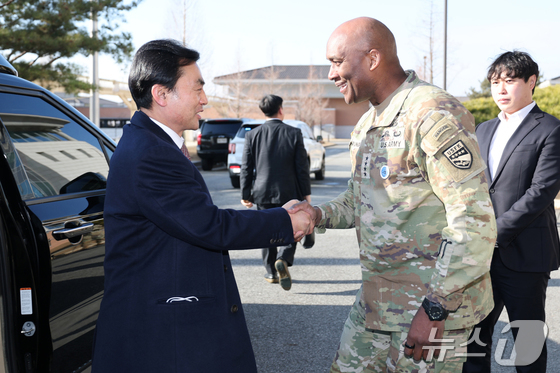
USFK Commander Gen. Xavier Brunson Addresses OPCON Transfer Timeline
During a hearing before the House Armed Services Committee on Wednesday, Gen. Xavier Brunson stated that they’ve submitted a roadmap to the Department of Defense outlining the steps to achieve conditions for OPCON transfer by Q2 FY2029 (Q1 2029 in South Korea).
This unprecedented public disclosure of a specific OPCON transfer timeline by the U.S. side marks a significant shift. While both nations have consistently affirmed the principle of a conditions-based transfer, a concrete timeline had not been previously specified.
Gen. Brunson’s statement aligns with one of President Lee’s key national security objectives: completing the OPCON transfer within his term. With Lee’s presidency extending to June 2030, the proposed timeline could see this crucial security milestone achieved during his administration.
However, the timeline’s coincidence with the end of the next U.S. presidential term in January 2029 introduces potential complications. The commitment of the incoming administration to pursuing OPCON transfer could significantly influence the process.
Of particular concern is the potential impact of the 2028 U.S. election cycle on the final OPCON transfer decision. The security policies of presidential candidates could sway the transfer’s timing and implementation.
The South Korean Ministry of National Defense is approaching Gen. Brunson’s statements with measured consideration. A ministry official clarified that Gen. Brunson’s remarks reflect U.S. Forces Korea’s (USFK) perspective, adding that the OPCON transfer timeline will be determined by U.S. and the Republic of Korea (ROK) defense ministers based on Military Committee recommendations and subsequently proposed to both nations’ presidents.
OPCON Transfer Progress: Second of Three Phases Likely to Conclude This Year
The OPCON transfer process involves three stages of evaluation and verification: Initial Operational Capability (IOC), Full Operational Capability (FOC), and Full Mission Capability (FMC). Currently, the U.S. and ROK have completed the FOC evaluation and are in the verification phase.
Completion of FOC verification this year would allow both nations to establish a target year for OPCON transfer and initiate the final FMC verification phase. The FMC stage, emphasizing qualitative over quantitative assessments, underscores the critical importance of strong U.S.-ROK relations and communication in driving progress.
Historically, the OPCON transfer timeline has undergone multiple adjustments based on bilateral political considerations. With the second phase alone spanning over three years and subsequent verifications facing delays, predicting future milestones remains challenging. The confidential nature of stage-specific evaluations and verifications contributes to timeline flexibility based on evolving circumstances and bilateral assessments.
Gen. Brunson reaffirmed the conditions-based approach during an Tuesday hearing, stating that political expediency must not supersede conditions. This underscores the prioritization of South Korean military readiness and capabilities over arbitrary transfer deadlines.
Key objectives include meeting conditions established during the third evaluation and verification phase. These encompass South Korea’s ability to lead combined defense operations, counter North Korean nuclear and missile threats, and foster a security environment conducive to the transfer. While some conditions are quantifiably assessable, evaluating the security landscape and threat levels inevitably involves strategic judgment.
Defense analysts anticipate that the U.S. military’s enhanced strategic flexibility under the new National Defense Strategy (NDS) and the resulting recalibration of alliance roles will maintain the OPCON transfer trajectory. The NDS outlines a more limited U.S. role in North Korean deterrence on the peninsula, emphasizing South Korea’s primary responsibility for self-defense – aligning with OPCON transfer objectives.
Experts suggest that the systematically structured, three-stage OPCON transfer process, which has progressed across multiple administrations, is likely to continue regardless of U.S. leadership changes, now that a timeline has been established.
A South Korean defense official stated that they’ve designated this year as pivotal for OPCON transfer progress and are committed to expediting the process, adding that they’re intensifying cooperation with the U.S. counterparts to finalize the transfer timeline by completing the Future Combined Forces Command’s FOC verification this year.