

The U.S. Forces Korea (USFK) has introduced a new concept called Regional Sustainment Hubs (RSH) in South Korea and allied nations. These hubs aim to integrate core capabilities, logistics, and transportation systems for maintenance and supply of U.S. military assets.
The RSH initiative encompasses not only U.S. forces stationed on the Korean Peninsula, such as fighter jets, but also all U.S. military assets in the region, including naval vessels from Japan. On Thursday, experts suggested this could present new opportunities for cooperation in maintenance, repair, and overhaul (MRO) within the South Korean defense industry.
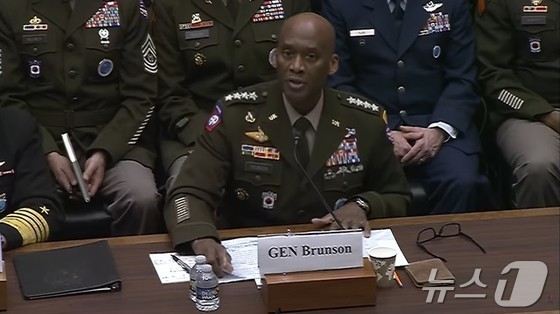
During a House Armed Services Committee hearing on Wednesday, Commander Xavier Brunson underscored the growing need for sustained support in the region. He stated that it will continue to emphasize the importance of RSH and similar initiatives. This central role will not only serve U.S. interests but also establish a competitive edge for the forces in cyber warfare, electronic warfare, and space operations on the Korean Peninsula.
The RSH concept is an evolution of the U.S. Indo-Pacific Command’s Regional Sustainment Framework (RSF). The Indo-Pacific Command implemented RSF to decentralize logistics support from the U.S. mainland and share security responsibilities with allies. This framework has enabled South Korean defense firms to collaborate on MRO with U.S. forces.
RSH further develops this approach by systematizing the 3C concept on the Korean Peninsula: critical capabilities (such as MRO), critical commodities (like fuel and ammunition), and critical conveyances (including transportation and distribution networks).
The U.S. adopted this concept primarily for economic efficiency. In the event of a conflict in the Indo-Pacific region, such as a potential Chinese invasion of Taiwan, transporting supplies and conducting repairs from the U.S. mainland would be costly and time-consuming. By establishing bases in allied countries, the U.S. aims to create a more sustainable support system.
Sources indicate that South Korea’s advanced MRO technology played a role in this decision. A USFK spokesperson stated that since 1978, they’ve collaborated with South Korean forces on various levels of maintenance and repair. It aims to leverage South Korea’s world-class defense industry for rapid resource maintenance, aligning with the ongoing efforts to enhance South Korea’s defense capabilities.
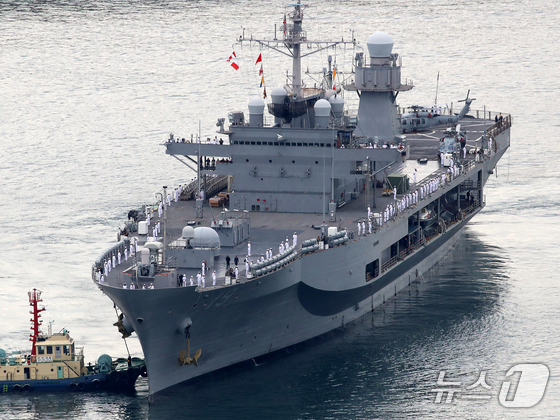
South Korean Defense Firms Expand Repairs of U.S. Jets and Warships on Peninsula… U.S. Forces Japan Also Targeted
In the Indo-Pacific region, both South Korea and Japan may serve as multiple RSH locations, potentially strengthening existing MRO support. USFK plans to broaden its scope to include maintenance cooperation for major assets like fighter jets and naval vessels, building on past experiences of repairing U.S. assets from Japan in Korea.
Assets covered under the RSH concept include F-15 and F-16 fighter jets and Patriot missile systems operated by USFK. There’s also potential for inclusion of U.S. naval vessels and logistics ships entering Korean ports.
A USFK source noted that many weapon systems used in the Indo-Pacific Command are similar, allowing for effective combat power deployment. During crises, it’ll need simultaneous support for ground, sea, and air systems. Drones are also a focus area.
The source added that these technologies are maintained by defense companies. It’ll encourage other allies to utilize South Korea’s excellent defense industry capabilities. By providing necessary support within Korea, it enhances the overall operational capacity in the theater.
USFK emphasized that establishing RSH is crucial for strengthening deterrence against North Korea and enhancing readiness on the Korean Peninsula. Future intergovernmental talks will explore expanding cooperation, potentially including U.S. vessel construction in Korea.
A USFK official stated that it can perform maintenance on major products quickly and cost-effectively. However, it currently can’t construct U.S. vessels in Korea. Producing new assets in South Korea would require ongoing U.S.-South Korean government consultations.
The establishment of this sustained support system for MRO and logistics on the Korean Peninsula is expected to create significant opportunities for South Korean companies like Korean Air, Hanwha Ocean, and HD Hyundai Heavy Industries, which have experience servicing U.S. military assets.
Korean Air has previously conducted MRO on U.S. fighter jets like the F-15 and F-16, as well as multi-purpose helicopters. HD Hyundai Heavy Industries and Hanwha have consistently secured contracts for maintaining U.S. Navy 7th Fleet supply and logistics support vessels. Industry experts believe that establishing a hub in Korea will increase participation opportunities and lead to cost reductions and other benefits.