

As U.S.-Iran tensions flare up again, expatriates from South Korean companies who were preparing to return to field operations have reverted to remote work.
Several firms had been planning for their personnel to resume on-site duties following last month’s ceasefire agreement between the U.S. and Iran. However, the recent resurgence of hostilities has forced an indefinite postponement of these plans. Major corporations have adopted a cautious stance, refusing to expedite the return of their expatriates until safety can be fully guaranteed.
The renewed conflict between the U.S. and Iran has dealt a severe blow to the aviation and maritime sectors. The airline industry’s hopes for a third-quarter performance rebound, buoyed by falling global oil prices, have been dashed. Similarly, the shipping industry is grappling with uncertainty regarding the resumption of Middle East services.
Major companies have effectively scrapped plans for expatriate returns.
Industry sources reported on Tuesday that as the U.S. and Iran reverted to pre-memorandum of understanding (MOU) tensions, major corporations have maintained remote work policies for their expatriates.
Samsung Electronics has evacuated personnel from conflict zones. In neighboring countries, they’ve maintained minimal staffing with many employees working remotely. The company plans to closely monitor the situation, only considering personnel redeployment once safety is fully assured.
A Hyosung Heavy Industries spokesperson stated that while the local situation remains volatile, the employees are stationed in relatively unaffected areas, so it hasn’t seen any significant changes yet. They added that the deployed personnel haven’t returned, and it’s closely monitoring local developments to inform the response.
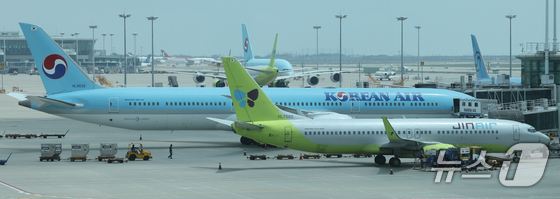
Surging oil prices amplify performance concerns; Q3 rebound prospects evaporate.
The aviation sector views the potential re-closure of the Strait of Hormuz as a major threat, likely to impact global energy markets and exacerbate geopolitical risks.
The escalating tensions have had an immediate impact on global oil prices. On Monday, Brent crude futures for September hit 89.22 USD per barrel, the highest since June 11, even briefly surpassing 90 USD during trading.
An airline industry insider noted that a spike in jet fuel prices would significantly increase airlines’ operating costs. They added that fuel surcharges tied to passenger demand typically lag behind, so it’ll need to closely monitor the situation.
Korean Air projects an annual fuel consumption of about 30.5 million barrels. A 1 USD fluctuation in Singapore jet fuel prices could result in a profit or loss of approximately 30.5 million USD.
The average price of Singapore jet fuel (MOPS), which determines fuel surcharges, had stabilized since peaking in May, leading to a reduction in August’s international fuel surcharges to level 14. However, this figure reflects oil prices from June 16 to July 15, not accounting for the recent conflict’s impact.
Another aviation sector representative explained that heightened geopolitical risks from the Middle East drive investors towards safe-haven assets, strengthening the dollar. This increases the foreign exchange losses and debt burden, as it pays for aircraft leases, airport fees, and depreciation in dollars.
Korean Air faces foreign exchange losses of about 55 billion KRW (about 37.2 million USD) and cash outflows of 16 billion KRW (about 10.8 million USD) for every 10 KRW (about 0.0068 USD) increase in the USD-KRW exchange rate. Asiana Airlines estimates that a 10% rise in exchange rates could slash pre-tax profits by approximately 477.5 billion KRW (about 322.8 million USD).
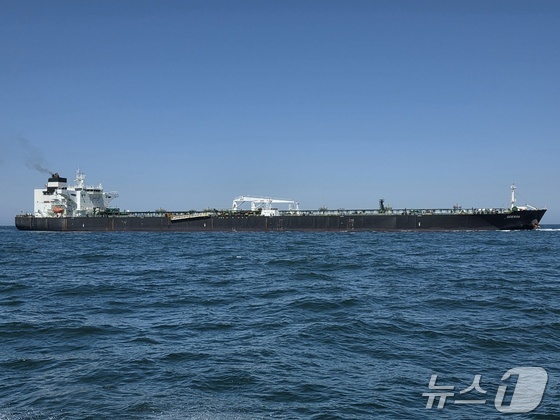
Middle East service resumption stalls; shipping industry faces prolonged uncertainty.
The shipping sector confronts similar challenges. Freight rates, which had briefly adjusted due to ceasefire expectations, now face renewed upward pressure amid resumed hostilities. The industry grapples with the dual challenges of surging fuel costs and disrupted Middle Eastern routes.
The Shanghai Shipping Exchange reported that as of July 17, the Shanghai Container Freight Index (SCFI) stood at 3080.31, down 104.52 points from the previous week. This marks a two-week decline following ten consecutive weeks of increases.
However, if Middle Eastern risks spill over into the Red Sea, freight trends could shift dramatically. Recent intelligence suggests Iran may leverage Yemeni Houthi rebels to threaten navigation through the Bab-el-Mandeb Strait at the Red Sea’s southern end.
The renewed Hormuz blockade has once again brought shipping traffic to a standstill. Maritime data firm Kpler reported that vessel transits through Hormuz plummeted from 21 on July 14 to just 13 on July 15.
A shipping industry representative stated that the U.S.-Iran conflict has halted the Middle East services indefinitely. They expressed concern over the prolonged uncertainty stemming from oil price volatility, noting its significant impact on the fuel-intensive shipping sector.