

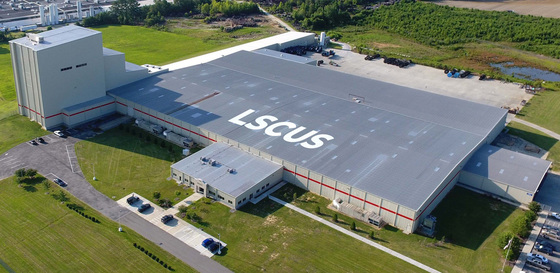
Gaon Cable is expanding its push into the North American AI data center market after securing a large-scale busduct supply contract with a U.S. artificial intelligence (AI) cloud provider.
Gaon Cable announced Aug. 20 that its U.S. subsidiary, LSCUS, will supply busducts worth a total of about $133 million for a U.S. AI cloud data center project.
AI cloud data centers are infrastructure facilities that deploy large-scale GPU computing servers to provide AI computing services. As demand for AI computing has surged, AI cloud providers have rapidly expanded their data center investments.
LSCUS is expanding its customer base beyond global big tech and generative AI companies to include AI cloud providers. Supplies will be delivered in phases through 2027.
Additional projects worth two to three times the value of the current contract are also under discussion, suggesting that the overall supply volume could increase further.
The projects include a 250-megawatt AI data center, the largest single-building data center supplied by LSCUS to date. As AI data centers have expanded into large-scale campuses reaching hundreds of megawatts, demand for power distribution infrastructure has also surged.
In line with LSCUS’s growing order volume, LS Cable & System is also expanding its busduct production capacity. Once expansions at its plant in Gumi, North Gyeongsang Province, and its Mexican manufacturing subsidiary are completed by the end of this year, production capacity is expected to increase to about three times its current level.
Gaon Cable CEO Jung Hyun said, “As AI data centers become larger and more densely configured, the importance of power distribution infrastructure is increasing,” adding, “We will further strengthen our push into the North American AI data center market based on a portfolio spanning busducts and medium-voltage cables.”
Meanwhile, Gaon Cable reported consolidated revenue of about $1.09 billion and operating profit of about $42.7 million for the first half of this year. The figures increased 27.3% and 41.8%, respectively, from the same period a year earlier.