

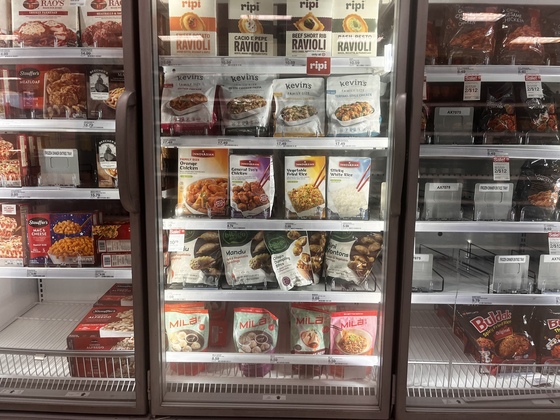
I could easily do my K-food shopping at the local supermarket now. This thought struck me as I wandered through a major grocery store in Los Angeles. The freezer section was bursting with Bibigo dumplings, while curry rice and kimchi rice sat side by side on the ambient shelves.
Heading to the ramen aisle, I spotted Shin Ramyun and Buldak Ramen stacked across multiple shelves. Korean food was everywhere, no scavenger hunt required.
Dumplings, Ramen, Gimbap… K-Food Taking Over the Aisles
On Monday, my trip to Target in LA revealed just how much K-food has leveled up in the local market. Once relegated to Korean markets or tiny Asian food sections, Korean products now claim prime real estate throughout mainstream supermarkets.
CJ CheilJedang’s Bibigo was the showstopper. As America’s frozen dumpling queen, Bibigo dominated freezer space with an array of goodies – steamed dumplings, mini wontons, and crispy dumplings. It was a thrill to see them holding their own against Asian food brands like MiLa and InnovAsian.
Bibigo’s conquest extended to the shelf-stable aisle too. Their White Rice (the American cousin of Hetbahn), curry rice, and kimchi rice bowls were lined up prettily. Some spots were picked clean, hinting at their rockstar status with local shoppers.
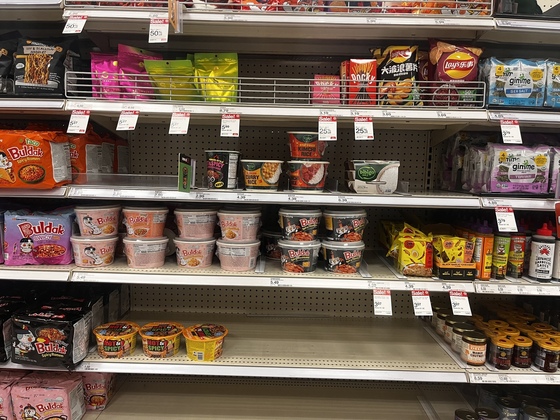
The ramen aisle was basically K-food central. Samyang’s Buldak Ramen, in flavors from classic to carbonara, dominated both bagged and cup formats across multiple shelves. Nongshim’s Shin Ramyun and Shin Ramyun Black held court at the top.
Tucked in the freezer was a surprise collab: spicy garlic and chili-flavored frozen gimbap from U.S. food company Ocean’s Halo and Korea’s Haenam Dangguk Hwangto Eco-Friendly Agricultural Association. Talk about K-food inspiring local innovation!
K-Food: From Niche to American Mainstream
The most jaw-dropping part of my Target adventure? Except for some ramen and rice bowls, K-food wasn’t corralled into a foreign foods ghetto. Dumplings and gimbap mingled with other frozen fare, while Buldak Ramen hung out in the discount aisle alongside American brands.
Gone are the days when scoring K-food meant a special trip to a Korean market or hunting down the tiny Asian food section. Now, it’s seamlessly woven into the average American’s grocery run. Instead of being labeled as exotic, these products are going toe-to-toe with local staples in their respective categories.
The K-food boom isn’t just anecdotal – the numbers don’t lie. The Ministry of Agriculture, Food and Rural Affairs reports K-food exports hit a record-breaking 7.05 billion USD in the first half of this year alone. And that’s not even counting what’s made and sold right here in the U.S.!
An industry insider spilled the tea: K-dramas and K-pop have been total game-changers, making Korean food and brands feel familiar and approachable. That cultural curiosity is translating into actual purchases, and retailers are taking notice. K-food’s presence in local stores is expanding at lightning speed.