

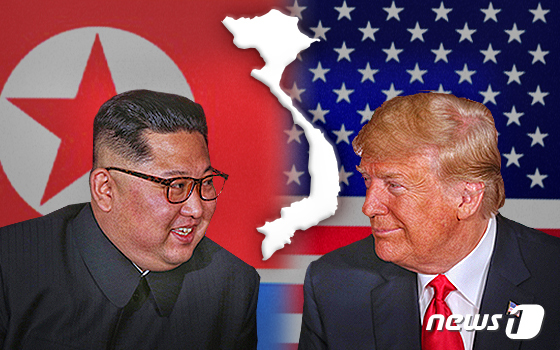
Observers are increasingly confident that the upcoming U.S.-China summit in Washington, D.C., scheduled for a month from now, could serve as a crucial diplomatic watershed for restarting talks between North Korea and the U.S. Speculation is growing that President Donald Trump might ask Chinese President Xi Jinping to play a role in bringing North Korea back to the negotiating table. On Monday, the government received advice to expedite strategic diplomacy towards the U.S. and China to avoid being sidelined in related discussions.
The government is urging the U.S. to maintain continuous contact with North Korea. It aims to coordinate in advance the goals, step-by-step procedures, and agendas for U.S.-North Korea negotiations. This preparation would ensure that the government can voice its opinions on key issues and play a substantial role when U.S.-North Korea dialogue resumes.
The government needs to request practical and constructive cooperation from China that could influence Kim Jong Un, the General Secretary of North Korea’s Workers’ Party. Simultaneously, it faces the dual challenge of preventing hasty U.S.-North Korea agreements that exclude denuclearization and managing signals that might suggest China is tacitly accepting North Korea’s nuclear status or the concept of two hostile nations. However, given the analysis that U.S. and Chinese interests differ from those of South Korea, experts predict that the diplomacy required over the next month will present significant challenges.
Need for Joint U.S.-South Korea Strategy on North Korea Before U.S.-China Summit; Must Prevent Recognition of North Korea as a Nuclear State
President Trump and President Xi are set to meet on September 24 in the U.S. Given that Trump has recently set a personal goal of meeting with Kim by year’s end, there’s a strong possibility that this summit will involve intense discussions on both countries’ diplomatic strategies toward North Korea.
The government must conduct a thorough exploration to identify potential avenues for future U.S.-North Korea and inter-Korean dialogues during the summit between the two leaders. There are growing concerns that South Korea could be sidelined in future North Korea diplomacy due to recent U.S.-led diplomatic efforts and China’s apparent support for North Korea. Therefore, it’s crucial for South Korea to make strategic diplomatic moves toward both the U.S. and China to prevent this scenario.
Experts emphasize that a priority for U.S. diplomacy is to clearly define the negotiation goals and agendas that South Korea and the U.S. can jointly present to China and North Korea. Even if they push for initial measures like halting nuclear and missile tests or freezing nuclear material production, these must be clearly defined as intermediate steps toward denuclearization rather than agreements that simply end with a freeze. This approach serves as a safeguard to prevent President Trump from prematurely recognizing North Korea as a nuclear state.
In diplomatic circles, there are expectations that the U.S. will communicate with South Korea when North Korea dialogue intensifies. However, President Trump’s recent stance suggests he intends to use all available means for direct talks with North Korea. Therefore, some experts argue that it’s crucial for South Korea and the U.S. to establish official counterparts for public communication at this juncture. This approach could also help prevent miscalculations by North Korea and its allies, China and Russia.
To achieve this, experts recommend that South Korea and the U.S. address recent tensions arising from the abrupt reduction of joint military exercises and create conditions for unified messaging.
Park Won-gon, a professor of North Korean studies at Ewha Womans University, stated that the best safeguard to prevent the North Korea dialogue from going off track is to restore the South Korea-U.S. relationship. South Korea and the U.S. must thoroughly coordinate on when, how, and what issues the dialogue will address.
China Speaks of Two Koreas While Staying Silent on Denuclearization: Seoul Urged to Demand a Concrete Role
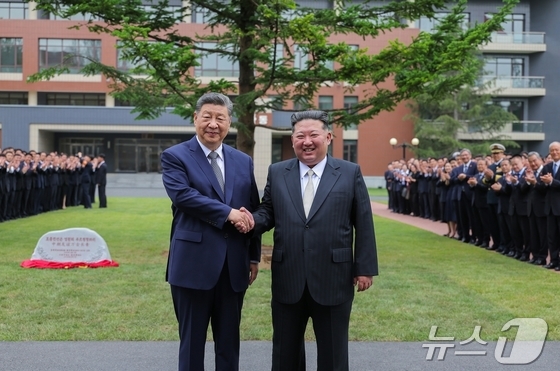
The government has been asking China to play a constructive role in encouraging North Korea to engage in dialogue. However, it has not clearly outlined what that constructive role would entail.
Experts argue that instead of vaguely asking China to persuade North Korea, the government should specify the roles China can realistically play. For instance, exploring the possibility of holding future U.S.-North Korea talks in China could allow China to save face while taking on a mediating role that aligns with South Korea’s demands.
Notably, China is set to host the Asia-Pacific Economic Cooperation (APEC) summit in Shenzhen this November. Given that President Trump has mentioned a fall North Korea dialogue, there are suggestions that the upcoming U.S.-China summit and APEC could serve as significant diplomatic events, prompting China to take on a meaningful role in North Korea diplomacy.
Victor Cha, the Korea Chair at the Center for Strategic and International Studies (CSIS), recently analyzed that China could support the resumption of U.S.-North Korea diplomacy to ingratiate itself with President Trump while subtly diminishing Russia’s influence over North Korea.
However, throughout this process, the government must maintain its principles regarding denuclearization and inter-Korean relations. After the U.S.-China summit in May, the White House announced that both leaders confirmed their shared goal of North Korean denuclearization, but China’s statement did not mention denuclearization, indicating skepticism about returning to past negotiation methods.
Wang Yi, the Chinese Foreign Minister, caused controversy by referring to North and South Korea as two countries during a recent meeting with his South Korean counterpart. Although the Foreign Ministry assessed that there has been no change in China’s stance on denuclearization, voices are emerging that stress the need to clearly communicate principles regarding denuclearization and inter-Korean relations to prevent such expressions from solidifying as China’s official external message.
Shin Bong-gil, former director of the National Diplomatic Academy’s Institute for Security Studies, stated that if it can elicit some concessions from North Korea through China’s leverage, that would be positive. However, he cautioned that achieving 100% denuclearization quickly is difficult, and all parties—the U.S., China, and South Korea—recognize this. The key lies in determining at what point to compromise, and the challenge is how far the government can assert its position in this regard.