

The U.S. government’s recent announcement of a buyback program to curb soaring long-term Treasury bond rates has sparked unexpected ripples across asset markets. In a surprising turn of events, ongoing fiscal stability concerns have heightened anxiety surrounding U.S. Treasury bonds, leading to an unusual phenomenon: simultaneous price increases in both gold, traditionally viewed as a safe-haven asset, and Bitcoin, typically considered a high-risk investment.
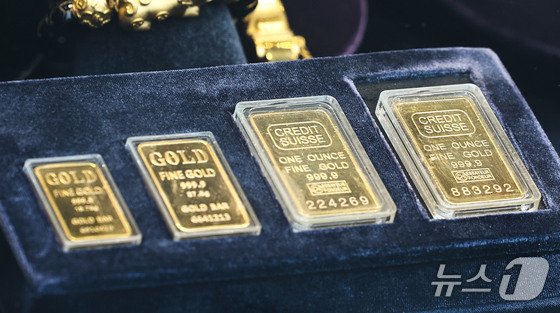
As of Monday, gold futures for December delivery on the New York Mercantile Exchange (COMEX) closed at 4,707.16 USD per ounce. This represents a significant 18% surge from its recent low of 3,992.10 USD on September 16, achieved in just over a month.
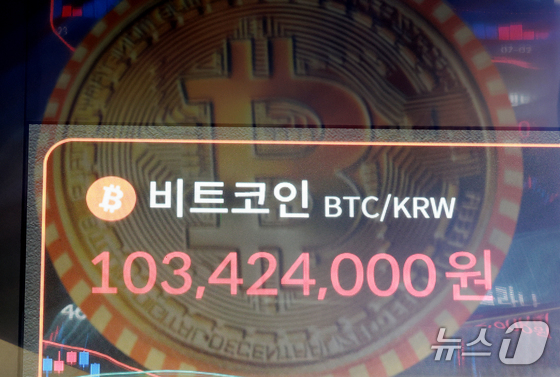
Bitcoin is also riding a wave of strength. According to the cryptocurrency exchange Upbit, Bitcoin was trading at approximately 105.95 million KRW (about 76,640 USD) on Monday afternoon. This marks a dramatic 19% increase from 89.17 million KRW (about 64,500 USD) on August 16, propelling Bitcoin above the 100 million KRW (about 72,320 USD) threshold for the first time since June 2.
Market analysts attribute this concurrent rise in gold and Bitcoin prices to growing unease about U.S. Treasury bonds and the dollar. As the U.S. national debt recently surpassed an unprecedented 40 trillion USD, heightened concerns over fiscal stability have fueled demand for alternative assets perceived as more resistant to value erosion compared to U.S. bonds and the dollar.
In response to a sharp increase in long-term Treasury bond rates, the U.S. Treasury announced on October 19 that it would double its long-term bond buybacks from 2 billion USD to 4 billion USD in an attempt to stabilize the market. While this initially caused bond rates to dip, persistent worries about fiscal deficits and inflation quickly reversed this trend, with rates rebounding within a day. Consequently, investors have increasingly turned to alternative assets like gold and Bitcoin as hedges against potential devaluation of fiat currencies.
The U.S. government’s efforts to suppress long-term Treasury bond rates have also contributed to a weakening dollar. When the central bank purchases bonds to lower interest rates, it increases the money supply, potentially decreasing the dollar’s value. As bond yields fall, investors receive less compensation, prompting them to seek better returns in other currencies. The dollar-won exchange rate, which had been hovering around 1,400 KRW per USD, plummeted to the 1,300 KRW range following the Treasury’s announcement on October 19, and has since stabilized around 1,384 KRW.
Market observers anticipate that the upward trajectory of gold and Bitcoin prices may continue in the near term. With confidence in the dollar waning, demand for alternative assets as hedging instruments is expected to grow. Given the underlying issues of the U.S.’s substantial fiscal deficit and Treasury bond burden, maintaining policies to suppress bond rates could exert further downward pressure on the dollar.
Park Sang-hyun, an analyst at iM Securities, cautioned that persistent instability in long-term Treasury bond rates, coupled with volatility in short-term funding markets, could potentially trigger financial instability akin to a rate shock. He suggested that the trend of Besenomics (fiscal tightening, inflation control, and a weak dollar) is likely to intensify leading up to the U.S. midterm elections, perpetuating the debasement trade phenomenon in the short term as investors respond to mounting fiscal uncertainties.
However, some experts predict that the rise in gold prices may be constrained. Choi Jin-young, an analyst at Daishin Securities, noted that funding for long-term bond buybacks will primarily come from short-term bonds, placing significant strain on the market. He added that the buyback expansion period is set to conclude after the U.S. midterm elections, expressing skepticism about the likelihood of gold prices surpassing their previous peak of 5,600 USD per ounce within the year.