

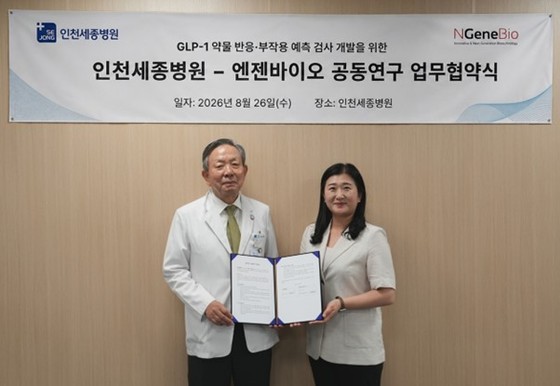
NGeneBio is developing a test to predict which patients will respond well to GLP-1 class obesity treatments like Wegovy and Mounjaro, and to assess their potential side effect risks.
The artificial intelligence (AI)-driven precision medicine company announced on Thursday that it has signed a memorandum of understanding (MOU) with Incheon Sejong Hospital. This collaboration aims to develop a genetic and blood testing solution to evaluate patient-specific treatment responses and side effect risks associated with GLP-1 obesity medications.
GLP-1 class treatments work by reducing appetite and increasing satiety, thereby promoting weight loss. While these drugs have rapidly gained market share due to their high efficacy, individual patient responses can vary significantly. Some patients may experience gastrointestinal side effects such as nausea and diarrhea, or more serious conditions like gallbladder disease or pancreatitis.
NGeneBio’s goal is to identify these individual differences through comprehensive genetic and blood tests. Their approach involves analyzing genetic information before treatment to predict efficacy and side effect risks. Post-treatment, they will monitor blood changes to detect early warning signs of major adverse reactions.
The partners will establish a clinical cohort of Korean patients, linking genetic profiles, blood test results, weight changes, treatment efficacy, and adverse reactions in those undergoing GLP-1 treatment.
This data will be used to validate the effectiveness of genes like GLP1R and GIPR in the Korean population, which have been associated with treatment responses in international studies. The research will also focus on identifying novel biomarkers specific to Korean patients, enhancing both testing products and analytical algorithms.
Earlier this month, NGeneBio unveiled plans to develop this genetic and blood testing solution for GLP-1 obesity treatments. This initiative expands their existing next-generation sequencing (NGS) technology, previously focused on precision cancer diagnostics, into the realm of obesity and metabolic diseases.
The company intends to leverage the accumulated test results and real-world treatment data to support pharmaceutical companies in their clinical development of obesity treatments and patient selection processes.
The clinical research will be spearheaded by the Obesity Metabolic Surgery Center at Incheon Sejong Hospital. This center has an impressive track record, having performed over 1,800 obesity metabolic surgeries since its inception, with a current average of about 60 surgeries per month.
Incheon Sejong Hospital will conduct long-term follow-ups on GLP-1 treatment patients, monitoring both efficacy and adverse reactions. They will also evaluate the clinical effectiveness of NGeneBio’s newly developed tests.
NGeneBio plans to utilize the data from this research in future collaborations with pharmaceutical companies. By identifying characteristics of patients who respond well to the medication versus those with lower efficacy or higher side effect risks, they aim to improve patient selection for clinical trials and inform new drug development strategies.
Kim Min-sik, Chief Executive Officer (CEO) of NGeneBio, emphasized the significance of this collaboration, stating that this partnership marks the first step in developing and validating products based on data from Korean patients. It’s committed to enhancing the comprehensive testing solution, which will cover everything from pre-treatment predictions to ongoing treatment monitoring.