The U.S. Federal Reserve (Fed) raised its benchmark interest rate and signaled the possibility of further hikes this year, pushing the dollar-won exchange rate to the mid-1370 KRW (about 1 USD) range in early trading.
As of 9:08 a.m. (KST) on Thursday in the Seoul foreign exchange market, the dollar-won exchange rate was trading at 1,375.1 KRW (about 1 USD), up 6.5 KRW (about 0 USD) from the previous day’s closing price of 1,368.6 KRW (about 1 USD).
Overnight, the global forex market saw the dollar strengthen as the Fed’s hawkish monetary policy stance was confirmed.
At its September Federal Open Market Committee (FOMC) meeting, the Fed increased the benchmark interest rate by 0.25 percentage points to a range of 3.75% to 4.00%. All 12 voting members supported the rate hike. The dot plot showed that 16 out of 18 Fed officials anticipate at least one more rate increase this year.
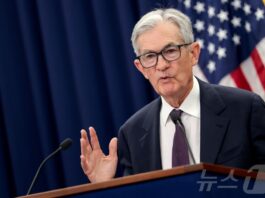
Fed Chair Jerome Powell noted that inflation remains elevated, leaving the door open for additional tightening. The Fed’s economic projections revised the year-end policy rate median from 3.8% in June to 4.1%, while also raising next year’s forecast from 3.6% to 4.1%.
Indicators of U.S. economic resilience heightened expectations of further tightening. August retail sales increased by 1.2% compared to the previous month, exceeding market expectations.
As a result, the dollar index, which measures the greenback’s value against six major currencies, rose by 0.70% to 100.31. The yield on two-year U.S. Treasury bonds climbed 7.5 basis points to 4.74%, while the ten-year yield increased 2.2 basis points to 5.02%.
Wall Street generally weakened amid tightening concerns. The Dow Jones Industrial Average fell 1.21%, the S&P 500 dropped 0.45%, and the Nasdaq slipped 0.01%. However, the Philadelphia Semiconductor Index bucked the trend, rising 0.63%.
Falling oil prices and dollar-selling by exporters are expected to limit further increases in the exchange rate. West Texas Intermediate (WTI) crude oil prices dropped about 3% following reports that Saudi Arabia is supplying additional oil through Oman.
In South Korea, continued stock selling by foreign investors due to the Fed’s tightening stance could exert additional upward pressure on the exchange rate. However, pending sell orders from semiconductor exporters are likely to cap the upper end of the range.
Min Kyung-won, an economist at Woori Bank, stated that the strong dollar resulting from the Fed’s rate hike and risk-averse sentiment will likely dominate as upward pressures. Offshore long positions following dollar strength and buying from custodians due to foreign stock sales will be the primary drivers of this trend.
He added that however, consistent sell orders from the semiconductor sector will weigh on the upper end of the exchange rate. While the Fed’s tightening policy and risk-off sentiment will exert upward pressure, export-related sell orders will likely constrain the upper limit, resulting in increases centered around the upper 1370 KRW (about 1 USD) range.