

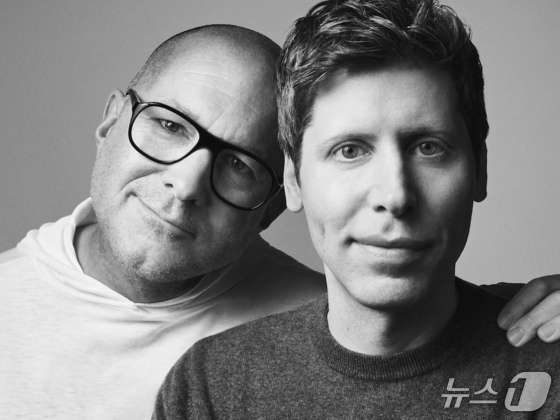
OpenAI has partnered with Jony Ive, former chief designer at Apple, to develop a new type of AI hardware, sparking interest in whether this collaboration could disrupt the smartphone-dominated mobile ecosystem.
Previous AI-specific devices largely failed, overshadowed by smartphones with integrated AI capabilities.
Analysts suggest that for next-generation AI devices to succeed commercially, they must offer practical user experiences and competitive pricing.
On Thursday, industry sources and international media reported that OpenAI announced the acquisition of io, an AI device startup founded by Jony Ive, for approximately 6.5 billion USD.
This marks OpenAI’s largest acquisition to date. The io team includes former Apple executives Scott Cannon, Tang Tan, and Evans Hankey, alongside Ive.
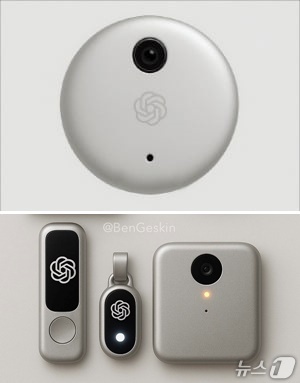
The AI device under development by OpenAI and io is rumored to be a small, display-less device, possibly worn around the neck.
This innovative device is expected to depart from traditional screen-based interfaces, capable of sensing the environment and responding to user behaviors even while pocketed.
OpenAI aims to launch the commercial product by late 2026, targeting production of 100 million units.
In an internal meeting, CEO Sam Altman described the new AI device as a third core device alongside Apple’s MacBook Pro and iPhone, positioning it as an AI companion. He emphasized its distinction from handheld devices, wearables, and smart glasses, stressing the importance of maintaining secrecy to prevent competitors from replicating their product.
Earlier in February, Altman stated in an interview with the Nikkei that AI fundamentally changes human-computer interaction, necessitating a new dedicated AI device.
Industry experts view this as a pivotal moment for OpenAI, as the leading AI software company expands into the hardware sector. This move is seen as OpenAI’s entry into the competitive AI hardware market, where tech giants such as Apple, Google, and Meta are already vying for position.
Currently, Meta dominates the global XR market with a 74-79% share through its Meta Ray-Ban smart glasses.
Apple is developing AI-based smart glasses, codenamed “N401,” with a target release date of 2026.
Google is also advancing an XR-based smart glasses project in collaboration with Samsung Electronics, Qualcomm Incorporated, Gentle Monster, and Warby Parker.
An industry insider noted that, with the participation of key Apple alums, including iPhone and iPad designer Jony Ive, there is significant interest in whether OpenAI can introduce a novel AI device as a viable alternative to smartphones.