

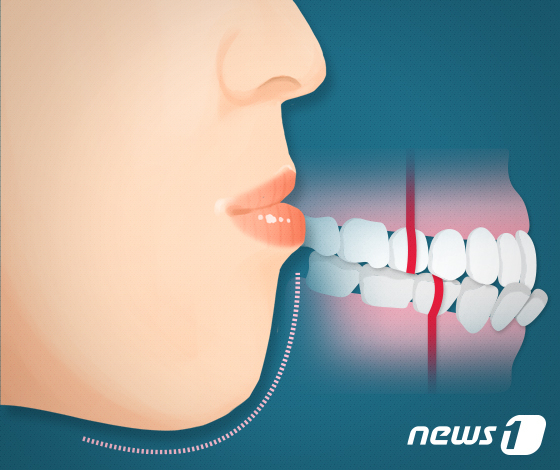
Suppose you have a severe underbite, receding chin, or a condition where your upper and lower teeth do not meet correctly. In that case, you may have considered jaw correction surgery, also known as double jaw surgery. However, not everyone who wants the procedure is eligible. This is a high-level surgery with potential complications that must be considered, including both functional and aesthetic outcomes.
So, who qualifies for the procedure, and what precautions are necessary?
Surgical Decision Based on Malocclusion or Facial Asymmetry—”Orthodontics for Growing Teens”
Jaw correction surgery is typically performed when there are abnormalities in how the upper and lower teeth align or in the size and position of the jawbones. It is recommended for those with an underdeveloped upper jaw (receding chin), an overdeveloped lower jaw (underbite), excessive gum exposure when smiling, or facial asymmetry. Due to the risk of severe complications if performed incorrectly, the decision must be made through consultation with a dental specialist and requires ongoing postoperative management.
Before surgery, facial bone analysis is essential, followed by a process to align the teeth and reposition the jawbones. If malocclusion is present, orthodontic treatment is typically conducted over six to 12 months in preparation. The length of this period may vary depending on the patient’s dental alignment and skeletal condition. In some cases, additional orthodontic treatment may be required after surgery to fine-tune the position of the teeth.
Eligible patients are adults whose growth has fully completed and who cannot resolve the issue through orthodontics alone. Adolescents, whose bones are still developing, are generally not suitable candidates for surgery and instead undergo orthodontic treatment.
A Complex Surgery Involving Artificial Jawbone Fracture—”Post-Discharge Care Is Crucial to Prevent Complications”
The surgery involves cutting and repositioning the upper and/or lower jawbones, followed by fixation. It typically takes about three to four hours. The key concern is that this procedure is a complex one that artificially fractures the jawbone, carrying significant risk. If the bone is fractured incorrectly, it cannot be properly realigned. There is also a risk of nerve and sensory damage, and in extreme cases, death. Surgeries performed for non-medical or purely cosmetic reasons may lead to complications such as difficulty chewing, osteomyelitis, temporomandibular joint disorders, and facial deformities.
Professor Ji Yoo Jin from the Department of Oral and Maxillofacial Surgery at Kyung Hee University Hospital in Gangdong emphasized the importance of verifying whether the medical facility can respond to emergencies and choosing a surgeon with extensive surgical experience. Jaw correction surgery is carried out through close collaboration between orthodontists and oral and maxillofacial surgeons. Patients must inform their medical team about any medications they are currently taking or any chronic conditions they may have before undergoing surgery.
Post-surgery, outpatient care and management are critical. Professor Ji noted that patients can return to their routine daily activities about a week after surgery, but advised delaying social activities, such as work or school, until at least four weeks post-surgery to allow for sufficient recovery.
Outpatient care should be conducted at least once a week for approximately two months after discharge. During this period, doctors monitor the healing of the surgical site, assess the stability of the jawbone, and provide rehabilitation as needed. Long-term follow-up includes imaging exams at three-month, six-month, and one-year intervals.
Experts stress that to prevent complications, patients must strictly adhere to follow-up consultations and treatment schedules and maintain thorough oral hygiene.