

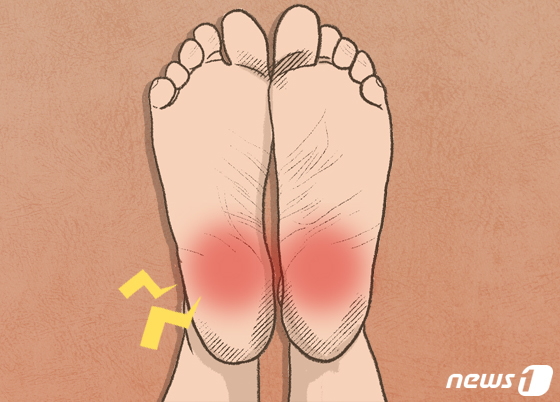
A 26-year-old woman recently began running to lose weight for the summer. Thanks to a combination of running and dietary management, she successfully lost 2 kg in just one week, boosting her confidence. Although she felt a sharp pain in her heel while running, she ignored it, eager to lose weight faster, and continued exercising.
However, what she initially thought was a minor issue soon became a significant problem. Until the previous morning, the pain would come and go, but now the entire sole of her foot aches to the point where even walking is difficult. Eventually, she visited an orthopedic clinic and was diagnosed with plantar fasciitis. Her condition was severe enough to require injection therapy and extracorporeal shockwave therapy.
Plantar fasciitis: excessive exercise, flat shoes, and obesity are among the causes
A nationwide running boom is underway. Attracted by the fact that running requires no special equipment and can be done anytime, anywhere, more people are taking up the activity. However, running without proper preparation can end up doing more harm than good, as it puts undue stress on muscles and joints if done without adequate warm-up and stretching.
Plantar fasciitis is one of the most common conditions among runners and is caused by inflammation of the plantar fascia—a fibrous band that stretches from the heel bone to the base of the toes and supports the arch of the foot. It plays a crucial role in absorbing shock and supporting the body’s weight.
This condition often occurs due to overuse, strenuous exercise, or wearing flat, hard-soled shoes. Other contributing factors include obesity and flat feet. It tends to affect middle-aged individuals more than young adults, and women more than men.
Stretching and medication for early-stage cases… Shockwave therapy and surgery for chronic cases
One of the hallmark symptoms of plantar fasciitis is a stabbing pain in the heel when first stepping out of bed in the morning. As the day progresses and walking increases, the pain may subside. As a result, many people delay seeking medical attention, believing it’s not a serious issue. However, if it becomes chronic, the treatment period is prolonged, and in severe cases, surgery to release or lengthen the plantar fascia may be needed. Early medical attention is recommended.
Professor Kim Min Wook of the Department of Rehabilitation Medicine at Incheon St. Mary’s Hospital, Catholic University of Korea, emphasized the importance of early treatment, noting that the longer symptoms persist, the lower the treatment success rate. He recommended visiting a rehabilitation or orthopedic clinic as soon as symptoms appear.
He added that in the early stages, plantar fasciitis can often improve with medication and stretching alone. However, since improvements usually take at least six months of conservative treatment, patients need to remain patient and consistent.
Treatment varies depending on the severity of symptoms. During the acute phase, accompanied by swelling, nonsteroidal anti-inflammatory drugs (NSAIDs) are typically prescribed. For chronic patients who do not respond to medication, extracorporeal shockwave therapy can promote healing of inflamed tissue. This therapy stimulates tissue regeneration and reduces nerve sensitivity to alleviate pain.
Stretch the plantar fascia and Achilles tendon before and after exercise… Running shoes that support the arch are helpful
To prevent plantar fasciitis, it’s important to avoid placing excessive strain on the plantar fascia. Reducing prolonged standing or walking is recommended. If you are overweight, losing weight can help relieve pressure on your feet. Warm foot baths are also effective in improving circulation, which helps prevent plantar fasciitis and eases pain.
Stretching both the plantar fascia and Achilles tendon before and after exercise is strongly advised. A common stretch involves bending the ankle toward the shin while pulling the big toe upward and massaging the stretched area of the fascia.
Choosing the right running shoes is also crucial. To prevent plantar fascia injuries, wear cushioned athletic shoes that support the arch. Replacing running shoes every 500 to 800 kilometers is also beneficial.