

North Korea has announced that the monsoon season will begin in late June and is focusing on preparations for the rainy period.
On Wednesday, the ruling party’s newspaper Rodong Sinmun published an article titled, “Recent Weather Characteristics and Monsoon Front Movement.” Citing reports from the State Hydro-Meteorological Administration, it stated that this year’s monsoon is expected to start 15 days earlier than the average year (July 13), predicting the rainy season to last from late June to early July.
The early onset is attributed to slightly higher-than-average sea surface temperatures in the western North Pacific. This has led to the rapid intensification of the North Pacific subtropical high-pressure system, which influences the formation and movement of the monsoon front in the region.
The forecast suggests a break in the monsoon from mid-July to early August, during which the weather is expected to be sweltering. Many areas may experience temperatures above 35°C (about 95°F) and drought conditions, while some localities could see heavy downpours. From mid-August onwards, the monsoon front moving southward from the north is anticipated to bring widespread rainfall.
North Korea has consistently suffered substantial human and material losses due to intense summer rainfall almost every year. Last July, flooding along the Yalu River resulted in numerous fatalities and missing persons, with homes washed away. Recovery efforts are still ongoing. Consequently, the country is placing the utmost importance on preparing for climate-related disasters this year.
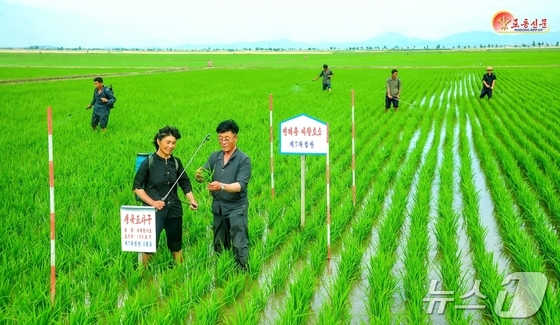
On June 14, the newspaper emphasized the need to harness scientific advancements to address weather-related calamities, particularly stressing the importance of intensifying research efforts to minimize crop damage.
To improve weather prediction accuracy, North Korea is also bolstering cooperation with Russia in meteorological science. In December last year, a delegation from North Korea’s State Hydro-Meteorological Administration visited Russia, indicating plans to discuss potential exchanges of weather observation data and mutual cooperation in areas such as severe weather forecasting.